
Grassroots innovation journey spotlights new pathways
Creating impact in the innovation ecosystem and reaching disadvantaged communities has been central to the Inventor Assistance Program (IAP), helping turn innovative ideas into commercial assets. The IAP is the World Intellectual Property Organization’s (WIPO) flagship project, launched in partnership with the Companies and Intellectual Property Commission (CIPC).
Read more: Grassroots innovation journey spotlights new pathways
Young Ideas — South Africa’s Future Gold Standard, CIPC IP Youth Awards 2026
The Companies and Intellectual Property Commission (CIPC) is proud to announce that they will be hosting the CIPC Intellectual Property (IP) Youth Awards 2026. The Competition is a dynamic platform designed to celebrate bold thinking, fresh innovation, and the next generation of business leaders.
Read more: Young Ideas — South Africa’s Future Gold Standard, CIPC IP Youth Awards 2026
dtic, CIPC AND SPU to host the 6th annual intellectual property and technology commercialisation colloquium
Key stakeholders from government, academia and business will convene in Kimberley, Northern Cape, for a colloquium aimed at strengthening South Africa’s innovation and technology commercialisation ecosystem and unlocking new economic opportunities.
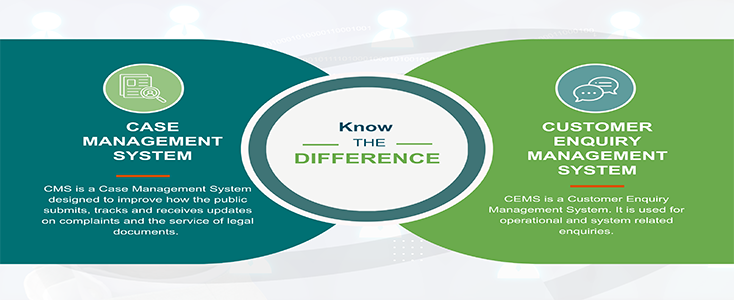
CIPC launches a Case Management System
The Companies and Intellectual Property Commission (CIPC) is pleased to announce the launch of its new Case Management System (CMS), a modern digital platform designed to improve how the public submits and tracks complaints and legal documents.
- Details
- Written by: CIPC
- Category: Uncategorised
- Hits: 21
- A co-operative may apply in terms of section 62 to:
- convert into any other form of corporate of unincorporated body in accordance with the applicable legislation; and cancel its registration as a co-operative.
- An application to convert may only be made if the board of directors has submitted a proposal to a general meeting, detailing the reasons for and the terms of the proposed conversion.
- A copy of the proposal must be attached to the notice of the general meeting and must be adopted by special resolution.
- A declaration by the board of directors of the co-operative must be attached to an application establishing:
- compliance with the relevant provisions of the Co-operative Act and the constitution of the co-operative; and
- that the interests of creditors will be protected in accordance with section 64.
- The registrar may require the board of directors to submit such proof as the registrar may require in any matter contained in the declaration by the board of directors.
- If the registrar is satisfied that there has been compliance with the provisions of this Act, the registrar must:
- cancel the registration of the co-operative; and
- remove its name from the register of co-operatives
- As from the date on which the registration of a co-operative is cancelled:
- the co-operative cease to exist
- all assets, rights, liabilities, and obligations of the co-operative vest in the corporate body or unincorporated association of persons into which the co-operative has been converted if it is by virtue of its constitution capable of owning property separate from its members; and
If the co-operative is converted into a company, all members of the co-operative become shareholders of that company
A co-operative can be converted to a company. The conversion can be done manually.
Note: Please note that when submitting your conversion application with the Companies Division, you must reserve the name and attach the conversion approval letter.
NB: Lodgement of a passport copy is only accepted as proof of identity for non-residents of South Africa. For South African residents a green bar-coded/ smart ID copy must be lodged
E-mail:
- Details
- Written by: CIPC
- Category: Uncategorised
- Hits: 18
If members decide to close down their Co-operative and end the business of the Co-operative, this is referred to as “winding up” or de-registering the Co-operative.
- The members may decide to voluntarily deregister the co-operative at a general meeting. In that case, you need to pass a special resolution and 75% of the members will have to vote in favour of the special resolution to voluntarily wind up the co-operative.There are two reasons why you might have to wind up your Co-operative.
- The members may decide to do this at a general meeting in terms of section 71A of the amended Act. In that case, you need to pass a special resolution and 75% of the members will have to vote in favour of the resolution. If you do this, then you will need to complete form CO-OP10 to inform the Registrar of Co-operatives that the members have voluntarily decided to deregister their Co-operative.
- A Court or the Tribunal may order that a co-operative be wound up to wind up its business if it is unable to pay its debts, it appears just and equitable to do so and there is no reasonable probability that it will be able to pay its debts or become a viable co-operative.
- Liquidation of a co-operative
Apply for voluntary winding up (de-registration) of your co-operative
The following supporting documents must be included:
- Complete form CO-OP10.
- A copy of the notice convening the meeting and setting out the proposed resolution and the reasons therefore
- Power of attorney – if representative
Liquidation or Winding up by Court Order
- Court order to commence winding up proceedings.
De-registration by order of the Minister of Trade and Industry
- The Registrar will notify the co-operative of liquidation or winding up proceedings.
NB: Please note that full finalisation of de-registrations is dependent on statutory advertisement process which is in excess of 3 months
E-mail:
- Details
- Written by: CIPC
- Category: Uncategorised
- Hits: 14
If members of a co-operative would like to divide a co-operative into two or more co-operatives, a special resolution is needed. Pass a special resolution at a general meeting convened for approval of the division. Each of the new co-operatives will have to comply with the requirements of a co-operative. The agreement must set out the terms of the division and how the division will be done, including the following:
- The provisions of the constitution of each co-operative
- Which members will become members of each of the co-operatives
- The manner in which the assets, rights, liabilities and obligations of the cooperative are to be divided between the co-operatives to be constituted by the division
- The business of each of the co-operatives constituted by the division and the area or sector in which they are to operate; and
- The name and address of the proposed directors of the co-operatives have to be constituted.
To divide a co-operative the following supporting documents must be included:
- CR1 – Application to register a co-operative
- CR4 – Notice of appointment of auditor OR
- CR8 – Application for exemption from full compliance with auditing requirements.
- Deposit R215.00 click here for bank details
- CoR9.4 – Confirmation notice of name reservation
- Certified identity copy of members
- Power of attorney (if applicable)
- Proof of payment of R215 per co-operative
- Copy/summary of the proposed division agreement must accompany the notice of meeting
- The constitutions of the co-operatives to be constituted by the division must be submitted to CIPC for approval together with a notice of their registered offices and a notice of the directors of the co-operatives in question.
- A declaration by the directors of the co-operative being divided, establishing that the relevant provisions of its constitution have been complied with in approving the division;
A declaration by the directors of each co-operative constituted by the division, establishing that there are reasonable grounds to believe that- - the co-operatives to be constituted will be able to pay their liabilities as they become due;
- the realisable value of the assets of the co-operatives to be constituted will not be less than the total liabilities, share capital and reserves; and
- the interests of creditors will be protected in compliance with section 64.
NB: Lodgement of a passport copy is only accepted as proof of identity for non-residents of South Africa. For South African residents a green bar-coded/ smart ID copy must be lodged.
E-mail:
- Details
- Written by: CIPC
- Category: Uncategorised
- Hits: 18
If members of a co-operative would like to amalgamate two or more co-operatives, a special resolution is needed. Pass a special resolution at a general meeting convened for approval of agreement to amalgamate two or more co-operatives.
The following supporting documents must be included:
- Complete the CR1 – Application to register a co-operative
- CR4 – Notice of appointment of auditor OR
- CR8 – Application for exemption from full compliance with auditing requirements.
- CR5 – Application for name reservation
- Deposit R245.00 click here for bank details
- Confirmation notice of name reservation – CoR9.4
- Certified identity copy of members
- Power of attorney (if applicable)
- Proof of payment of R245
- Copy/Summary of the proposed amalgamation agreement must accompany the notice of meeting
- Notice of registered office, directors of the amalgamated co-operative
- Declaration by the directors of each amalgamating co-operative stating that the amalgamated co-operative is liquid, solvent and interests of creditors will be protected.
- The board of directors of each amalgamating co-operative must submit the proposed agreement to amalgamate to a general meeting of each amalgamating co-operative
- A copy or summary of the proposed amalgamation agreement must accompany the notice of such meeting
- An amalgamation agreement must be approved by special resolutions of each amalgamating co-operative
- After approval of an amalgamation agreement, the constitution of the amalgamated co-operative must be submitted to the registrar for approval, together with a notice of its registered office, a notice of the directors of the amalgamated co-operative
- A declaration by the directors of each amalgamating co-operative must be attached to the constitution submitted as mentioned above, establishing that the relevant provisions of their constitutions have been complied with in approving the amalgamation, and that there are reasonable grounds to believe that-
- the amalgamated co-operative will be able to pay its liabilities as they become due;
- the realisable value of the amalgamated co-operative’s assets will not be less than the total of its liabilities, share capital and reserves; and
- the interests of creditors will be protected in compliance with section 64.
NB: Lodgement of a passport copy is only accepted as proof of identity for non-residents of South Africa. For South African residents a green bar-coded/ smart ID copy must be lodged.
E-mail:
Useful Resources
Legal
Other
Need Help
Connect With Us
Download our App