Grassroots innovation journey spotlights new pathways
Creating impact in the innovation ecosystem and reaching disadvantaged communities has been central to the Inventor Assistance Program (IAP), helping turn innovative ideas into commercial assets. The IAP is the World Intellectual Property Organization’s (WIPO) flagship project, launched in partnership with the Companies and Intellectual Property Commission (CIPC).
Read more: Grassroots innovation journey spotlights new pathways
Young Ideas — South Africa’s Future Gold Standard, CIPC IP Youth Awards 2026
The Companies and Intellectual Property Commission (CIPC) is proud to announce that they will be hosting the CIPC Intellectual Property (IP) Youth Awards 2026. The Competition is a dynamic platform designed to celebrate bold thinking, fresh innovation, and the next generation of business leaders.
Read more: Young Ideas — South Africa’s Future Gold Standard, CIPC IP Youth Awards 2026
dtic, CIPC AND SPU to host the 6th annual intellectual property and technology commercialisation colloquium
Key stakeholders from government, academia and business will convene in Kimberley, Northern Cape, for a colloquium aimed at strengthening South Africa’s innovation and technology commercialisation ecosystem and unlocking new economic opportunities.
CIPC launches a Case Management System
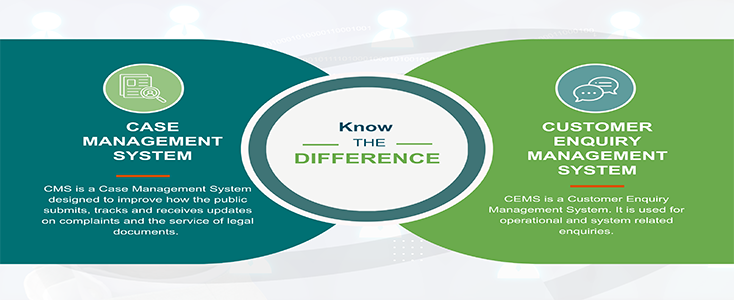
The Companies and Intellectual Property Commission (CIPC) is pleased to announce the launch of its new Case Management System (CMS), a modern digital platform designed to improve how the public submits and tracks complaints and legal documents.
- Details
- Written by: CIPC
- Category: Uncategorised
- Hits: 15
- Details
- Written by: CIPC
- Category: Uncategorised
- Hits: 13
- Details
- Written by: CIPC
- Category: Uncategorised
- Hits: 106
The Companies and Intellectual Property Commission (CIPC) is mandated to monitor compliance with legislative and regulatory requirements, including the submission of annual returns, auditor rotation, financial reporting disclosures, and prospectus requirements. The Commission also investigates complaints and enforces provisions of the Companies Act, Close Corporations Act, Share Block Companies Act, and Co-operatives Act relating to governance and disclosure.
The Compliance and Regulations section provides access to information and services relating to company and business registers, compliance obligations, practitioner accreditation, and relevant legislation. It also supports business owners and practitioners through compliance education and promotes adherence to statutory requirements to strengthen good governance, transparency, and corporate accountability.
Complaints relating to companies may be submitted to the CIPC for assessment and appropriate action, which may include referrals to relevant authorities or formal investigation processes.
Beneficial Ownership (BO) refers to the individuals who ultimately own or control a company or legal entity, regardless of whether they are listed in the official records. Recognising these individuals is vital for promoting transparency, preventing financial crimes such as money laundering and terrorism financing, and maintaining accountability within corporate structures.
The Financial Action Task Force (FATF) is a global inter-governmental body that promotes policies and sets international standards relating to the combating of money laundering, terrorist financing, and the financing of the proliferation of weapons of mass destruction. Following an evaluation in 2021, South Africa was found to have strategic Anti-Money Laundering and Countering the Financing of Terrorism (AML/CFT) deficiencies, and was subsequently placed under “increased monitoring”, otherwise referred to as “greylisting”. The government adopted an action plan to address the identified deficiencies. Among these, South Africa had to ensure that competent authorities have timely access to accurate and up-to-date BO information on legal persons and that sanctions are applied for breaches of violations by legal persons to BO obligations.
Following the FATF recommendations, South Africa has made significant steps to enhance corporate transparency around beneficial ownership. Amendments to the Companies Act, 71 of 2008, introduced by the General Laws (Anti-Money Laundering and Combatting Terrorism Financing) Amendment Act, 22 of 2022, have mandated clearer reporting and documentation of beneficial ownership. On 1 April 2023, the Companies and Intellectual Property Commission (CIPC) launched the Beneficial Ownership Register. This platform requires all corporate entities registered with the CIPC (with the exception of co-operatives) to submit their beneficial ownership information, effective from 24 May 2023.
Starting from 1 July 2024, a hard stop functionality was introduced that require all companies and close corporations to submit Beneficial Ownership Declarations alongside their Annual Returns. Entities are required to file Annual Returns, Beneficial Ownership Declarations, and a security register and/or beneficial interest register each year within 30 business days following the anniversary date of their incorporation. Entities that are BO non-compliant will not be able to continue and finalise their Annual Return submission, resulting in penalty fees for late submission or ultimately deregistration of the company.
Despite the annual filing obligation, newly incorporated entities are mandated to file their BO information within 10 business days of their incorporation. All other entities are required to file amended BO declarations within 10 business days of any changes occurring to their BO information.
Every entity is responsible for submitting accurate, complete and verified beneficial ownership information to the CIPC. Providing false or misleading information is an offence under the amended Companies Act, and violations will result in enforcement actions, including sanctions such as a referral to the NPA for criminal prosecution. CIPC’s BO system therefore allows companies to immediately amend and resubmit BO filings to correct any incorrect or incomplete information in a company’s BO submission. The CIPC has also implemented a reviewer system to inspect and analyse submissions, allowing for clarification or corrections as needed. Alerts for necessary re-submissions are communicated via email. This not only ensures compliance with the law but also helps companies to maintain accurate records.
The CIPC is committed to improve service delivery and user experience, particularly for supporting foreign participation in corporate structures. Effective from 16 February 2024, the Foreigner Assurance process was integrated with the beneficial ownership submission system. The exclusively online Foreigner Assurance service on the CIPC’s e-Services platform enables foreign nationals to electronically submit their information, accompanied by a certified passport or foreign identity document, for verification prior to engaging with CIPC’s platforms. This integration ensures that Beneficial Ownership declarations by foreign nationals are cross-verified with the Foreigner Assurance database, thus strengthening the accuracy and integrity of our corporate registers.
The CIPC is dedicated to assist South Africa’s alignment with the FATF recommendations by promoting compliance among corporate entities and instituting enforcement actions against non-compliant entities. There are several consequences a company or close corporation may face if beneficial ownership information is not up to date. The entity may incur penalties for the late filing of Annual Returns, enforcement action may be taken by the CIPC through investigation into the administration and governance processes of a business and even the issuing of a compliance notice; and/or referral for deregistration and even final deregistration due to non-compliance.
The enforcing of beneficial ownership filing should however not be seen as a punitive measure, but rather as a collective effort to promote transparency and to minimize the risk of financial crimes in South Africa. In the words of the CIPC Commissioner, Adv. Rory Voller “Promoting a culture of transparency and integrity can elevate South Africa as one of the sought after investor friendly destinations and thereby unlock progress towards economic growth and development.”
To view the list of entities that are non-compliant with beneficial ownership requirements, click here.
Click here for BO technical troubleshooting FAQ
Click here for Step-by-Step Guides.
Click here for guidance on the required contents of the Mandate, and the Securities and Beneficial Interest Registers.
Click here for a Securities Register template.
Click here for FAQ’s on Beneficial Ownership.
Click here for webinars on Beneficial Ownership.
Click here for the CIPC service standards. Service Standard is dependent on payment for the transaction being made.
For enquiries, send an email to:
Definitions:
“Affected” company: any regulated company including the following:
- All Public companies, including public companies listed on a stock exchange.
- State owned companies.
- Any private company regulated by the Takeover Regulations and which experienced a transfer of more than 10% of its securities as a result of an amalgamation or merger during the previous 24 months.
- Any subsidiary of an affected company.
“Non-affected” company: any company that is not classified as an “affected” company.
“Beneficial interest”: the right or entitlement of a person, through ownership, agreement, relationship or otherwise, alone or together with another person to—
- receive or participate in any distribution in respect of the company’s securities;
- exercise or cause to be exercised, in the ordinary course, any or all of the rights attaching to the company’s securities; or
- dispose or direct the disposition of the company’s securities, or any part of a distribution in respect of the securities.
- the holding of beneficial interests in the securities of the company;
- the exercise of, or control of the exercise of the voting rights associated with securities of the company;
- the exercise of, or control of the exercise of the right to appoint or remove members of the board of directors of the company;
- the holding of beneficial interests in the securities, or the ability to exercise control, including through a chain of ownership or control, of a holding company of the company;
- the ability to exercise control, including through a chain of ownership or control, of—
-
- a juristic person other than a holding company of the company;
- a body of persons corporate or unincorporate;
- a person acting on behalf of a partnership;
- a person acting in pursuance of the provisions of a trust agreement; or
- the ability to otherwise materially influence the management of the company.
-
-
Customer Notice 2023: Implementation of the beneficial ownership regime by the Companies and Intellectual Property Commission (CIPC)
-
Customer Notice 53 of 2023: Enforcement of beneficial ownership filings and securities registers as from 01 October 2023
-
Customer Notice 40 of 2023: Securities register and beneficial interest register functionality release
-
Customer Notice 5 of 2024: Enforcement of beneficial ownership filings and securities registers
-
Customer Notice 12 of 2024: Beneficial ownership register
-
Customer Notice 13 of 2024: Foreigner assurance process integration with beneficial ownership
-
Customer Notice 26 of 2024: Incorporating beneficial ownership information with annual return filings for companies and close corporations
-
Customer Notice 39 of 2024: Incorporating beneficial ownership information with annual return filings for companies and close corporations
-
Customer Notice 54 of 2024: Enforcement of beneficial ownership filings and securities registers
-
Customer Notice 58 of 2024: Notice of Beneficial Ownership (BO) non-compliance
-
Customer Notice 61 of 2024: Additional function on Beneficial Ownership Declaration service – complex structures
-
Media release 11 of 2023: CIPC implements a beneficial ownership interface
-
Media release 4 of 2024: CIPC to enforce beneficial ownership declaration with annual return filings for companies and close corporations
To view entities that are non-compliant with beneficial ownership regulations, find the corresponding list:
Report on Investigation into Proflex Investments
Recourse for Shareholders and Directors
2017 Inspectors Reports
- Details
- Written by: CIPC
- Category: Uncategorised
- Hits: 355
At the Companies and Intellectual Property Commission (CIPC), intellectual property (IP) refers to creations of the mind that can be legally protected, including inventions, literary and artistic works, designs, and symbols, names and images used in commerce.
In South Africa, CIPC administers key forms of IP protection, including patents, trade marks and registered designs, while copyright protects qualifying original works under the law. These protections help creators, innovators and businesses secure recognition and commercial value from what they create, while also supporting innovation, competition and economic growth.
Aesthetic designs and functional designs can also be protected to safeguard the appearance or features of a product, depending on the nature of the design.
| TRADE MARKS | Register Trade Mark Maintain Trade Mark |
| DESIGNS | Register Design Maintain Design |
| PATENTS | Register Patent Maintain Patent |
| COPYRIGHT | Register Copyright Maintain Copyright |
Commercialising IP is the process you undertake to get your products or services into the market place. Your strategy depends on your business. How you commercialise your IP depends on your particular IP? It depends on your circumstances, business capabilities, understanding of the market and your ability to generate finance. Licensing is the most common commercialisation method, but it is just one of many options for taking your IP to the market place. You need to consider questions such as:
- Do you want to commercialise in-house or with a partner?
- Do you want to manufacture, market or sell your product?
- Do you want to outsource?
Summary of key concepts in commercialisation
- Commercialisation is the process of getting your IP to market.
- You can commercialise on your own, through a partnership or a combination of the two.
- Make sure, regardless of how you commercialise your IP, you maintain confidentiality arrangements with all parties.
- There are a number of options available when commercialising with partners. In licensing, the owner might give up the right to commercialise, but not the ownership of the IP itself.
- Exclusive licences are the most common commercialisation mechanism used.
- There are a number of shades of exclusivity – product, field, territory restrictions or a combination of these.
- Licences include trade mark licences and franchises.
- Assignment is not licensing, it involves transferring or selling the IP – the owner retains no rights to the IP.
- Another mechanism for commercialising IP is a start-up company involving a venture capitalist or a joint venture with other parties or established companies.
- Royalties are payments associated with licences and they can be calculated in a number of ways.
- Further support
- Once you have decided the best approach to commercialise your IP, you can consider the potential for international expansion.
Licensing, Franchising and Assignment Licensing is a common strategy to commercialise IP. It simply means that permission is granted by the owner of an IP right to another person or organisation to use it on agreed terms and conditions. There are different types of licencing available. A franchise is a form of licence, while assignment is the outright sale of IP. IP licensing gives the licensee the right to use (but not own) the copyright, patent, trade mark, design, technology, technical know-how or specific marketing skills to their advantage. They can use the IP right for a defined purpose, in a defined territory, for an agreed period of time. The licensee isn’t paying for a product; they are paying for access to legal exclusivity. The value of the IP rights is negotiated and is based largely on the strength of the IP rights in the creation or invention. Licensing: Licensing your IP to another party can be an effective way to exploit IP, particularly if you don’t have the resources or experience to develop and market your product or service. Licensing arrangements are common involving copyright, patents, design and trade marks, but any type of intellectual property can be licensed. Key points on licensing:
- A licence is a contract where the IP owner gives permission to a licensee to commercialise that IP.
- A licence can cover product development, manufacture, marketing and selling products.
- The owner of the rights will usually receive payments in the form of royalties in return for their use. The value of the rights is an agreement based largely on the type of IP involved.
- An exclusive licence is the most commonly used mechanism to commercialise IP with a partner, but there are many other types of licences, including know-how, trade mark and non-exclusive.
- Taking out a licence is a cost-effective alternative to investing in development that has already been done.
- If you think licensing is for you, learn more about the specific licence conditions you need to consider. We recommend you seek the advice of a licensing expert to help you in negotiations.
Franchising – a form of licence When the owner of a successful business wants to expand without borrowing capital to develop, they can license IP to franchisees. This generally includes trade marks, logos, promotional material, the business system, various processes and shop fit-outs. Key points on franchising:
- Franchising is a method or system for distributing goods and services.
- The franchisor owns the IP rights over the marketing system, service method or special product.
- The franchisee pays a fee or regular royalties for the right to trade under the brand name.
- The franchisee benefits from coordinated marketing efforts and a developed business system.
Assignment – selling your IP An assignment is an outright sale of IP. You transfer your ownership to another person. This can be a viable business strategy if you prefer to receive a substantial up-front lump-sum payment instead of smaller royalty payments throughout the commercialisation period. An assignment must be recorded in the CIPC Patent, Design or Trade Mark Register, as the case may be, in order for that assignment to be valid with regards to 3rd parties. If an assignment is not recorded in the relevant Register, it is valid only between the parties to that agreement. When IP owners transfer their ownership, they cannot impose any performance obligations on the new owner. This is different from licensing. The lump-sum payment for an assignment should be regarded as a purchase price. The owner should factor into the purchase price:
- all costs, including direct and indirect costs of research and development, materials, any outsourcing and the cost of protecting the IP
- a profit component
- the potential market value of the technology or IP.
The IP purchaser, however, may seek to pay royalties instead of a lump sum (or a combination thereof) for the assignment of title to the IP in question. In this way, the purchaser’s initial capital outlay is less and payment for the IP in the form of royalties becomes conditional on the IP product being successful in the market place. In this case, if there is no success there is no payment.
Differences between trade marks, business names and and domain names Registering a business, company or domain name does not give you any proprietary rights. Only a trade mark can provide that kind of protection. If you register a business, company or domain name, you do not automatically have the right to use that name as a trade mark. The same word(s) may be registered by different people as a business name in other states and territories. However, if you have a registered trade mark in South Africa, you can take legal action for infringing your trade mark if the business name owner uses it for goods or services like those covered by your trade mark registration in South Africa.
Trade mark: Used to distinguish your goods or services from those of other traders. When you register a trade mark you obtain exclusive use of the trade mark in the country where your trade mark is registered.
Business name: A business name is the name under which your business operates. Registration identifies the owners of the business. Unlike trade marks, company names do not necessarily provide proprietary rights for the use of the trading name.
Domain name: All computers on the internet have a unique identifying number – an Internet Protocol address. Because Internet Protocol addresses are difficult to remember, we use a domain name – a unique name that corresponds with an Internet Protocol address (www). The rules and policies for registration of domain names in South Africa can be viewed at https://www.zadna.org.za/ You can trade mark your domain name if it meets the requirements of the Trade Marks Act.
When a right holder discovers that his/her intellectual property (IP) rights have been infringed, or are about to be infringed, the focus of his/her attention shifts.
He/She may have previously concentrated on how to obtain and make use of his respective rights, but now his attention will concentrate on making sure that the rights he has obtained through the IP system are respected. This includes stopping unauthorised use, deterring future infringements, and obtaining recovery for damages resulting from the infringing act. An effective IP enforcement regime depends on a number of different elements and enforcement of rights obtained are fundamental to this. As a result, IP enforcement policies encompasses a range of different objectives . IP enforcement is based in an holistic approach that include civil procedure, available remedies through criminal action, structure and specialisation of courts and appellate bodies, cost of litigation and legal advice. Additionally, alternatives to court procedures, such as arbitration or mediation, are similarly effective. Assistance for rights holders in enforcing their rights, and technological measures that rights holders may take to prevent others from illegal use of their IP rights, are relevant to an effective enforcement regime. In support of the above and required by the TRIPS agreement criminal sanctions, and the role of customs are central. . In order to enforce their IP rights successfully, the rights holders therefore have to take into account a large number of legal issues and practical considerations. To view more information, click on the relevant link:
The IAP is an initiative of the World Economic Forum (WEF) and World Intellectual Property Organisation (WIPO). The IAP exists to open doors for inventors who have brilliant creations but limited resources. By offering support to Intellectual Property (IP) protection, particularly patents and functional design. The IAP aids under resourced South African inventors in acquiring enforceable rights for their creations, by providing them with pro bono legal services. The program is open to individual inventors/designers and Small, Medium and Micro Enterprises (SMMEs).
The patent attorneys who participate in the program volunteer their time and expertise and are registered with WIPO as pro bono attorneys for the program. The IAP patent attorneys provide patent consultancy related services to individuals/SMMEs to protect their creations.
Explore this page to gain a comprehensive understanding of the program’s eligibility requirements, and the ways in which we can assist in transforming your innovative creations into intangible assets with market potential.
Goal Of the Program
The principal goal of IAP is to provide applicants with the support they need to file provisional/complete patent and/or functional design applications and ultimately enjoy benefits of a duly granted patent or registered design.
As of 2025, pilot projects of the IAP were implemented in:
- Chile
- Colombia
- Ecuador
- Kenya
- Morocco
- Pakistan
- Peru
- the Philippines
- Singapore
- South Africa
Eligibility & Participation
- To qualify for the (IAP), an applicant must:
- Be a South African citizen, if applying as an individuals: Earn less than R30,000 per month after tax.
- South African Registered Business: Annual turnover of less than R5 million.
- Show basic understanding of the patent system by completing the IAP Learning Module. Accessible: https://iap.wipo.int/iap/tutorial/en/benefits-of-securing-a-patent
- The invention concerned:
- On face value meets the criteria for patentability.
- Has prospects for commercial success.
Proof of Eligibility
- Examples of required documents to establish compliance with the financial requirements:
- Tax returns
- Income /Bank statements
- Affidavits or other supporting documents (not older than six months).
- Certified Identity Document not older than six months
- Company registration certificates
- Documents provided must establish compliance to the satisfaction of the office
- Any other document to satisfy the requirements
How to Apply?
- File an application on the WIPO IAP Online Platform, accessible: https://www.wipo.int/en/web/inventor-assistance-program
- Create a WIPO account first.
- Complete IAP Learning Module
- Selection Stage
- The national steering committee reviews all applications to determine whether the applications meet the eligibility criteria, which will, in turn, give recommendations to WIPO concerning the application. Any outcome is communicated to the applicant as well.
- Pairing Stage
- If recommended, you are paired with a volunteer patent attorney experienced in the technical field of your invention.
Multiple Applications
- Applicants may submit only two applications for review per quarter (3 months).
- Only two successful IAP applications per applicant may be eligible for pairing with a volunteer patent attorney in one financial year (from April 1 to March 31).
Quality of Applications
- Sufficient information regarding the invention/functional design must be provided in an application to allow the Steering Committee to fully understand the benefits, unique features and how the invention/functional design will work. To provide sufficient information, please include a detailed description of the invention/functional along with any applicable drawings. Insufficient information may lead to a regrettable outcome.
- The creator of an invention/functional design must be a natural person. Therefore, IA generated creations are disqualified from the program as they do not meet the requirements for patentability or functional design protection.
Steering committee
The steering committee is responsible for overseeing the implementation of the IAP, comprises of representatives from the:
- Department of Trade Industry and Competition (DTIC),
- Companies and Intellectual Property Commission (CIPC),
- National Intellectual Property Management Office (NIPMO),
- Technology Innovation Agency (TIA),
- Small Enterprise Development and Finance Agency (SEDFA).
Screening Committee Scheduled Meetings for the Year 2026/2027
| SC Meeting | Cut off date | Expected outcome date |
| Q1 2026 | 24 April 2026 | 25-29 May 2026 |
| Q2 2026 | 10 July 2026 | 24-28 August 2026 |
| Q3 2026 | 09 October 2026 | 23-27 November 2026 |
| Q4 2027 | 08 January 2027 | 22-26 February 2027 |
IMPORTANT:
- Kindly be advised that any documents or applications submitted after the designated cut-off date will be deferred for the subsequent steering meeting. This timeline allows for sufficient time for proper review of applications. To avoid any delays in the evaluation of your application, we encourage you to submit all required documents well before the specified cut-off date for that specific steering meeting.
- The expected outcome date refers to the designated period within which applicants can anticipate receiving an official notification regarding the outcome of their application. Please note that this timeline applies exclusively to submissions that were received prior to the specified cut-off date and are therefore considered timely.
- If you have a previously filed provisional patent application and wish to receive assistance with a complete patent application, the IAP application must be received at least six months before the complete application is due to be filed (i.e., a complete application must be submitted within 12 months from the provisional filing date, or within a further three (3) months if an extension is granted by the Registrar).
- The IAP cannot guarantee the timeline between pairing you with a volunteer patent attorney and filing your patent specification/functional design registration with the patent office, as this depends on the availability of the assigned patent attorney.
- It is the discretion of the pro bono attorney to determine the extent of their assistance post filing and prosecution to grant of the complete South African patent/design application.