
Grassroots innovation journey spotlights new pathways
Creating impact in the innovation ecosystem and reaching disadvantaged communities has been central to the Inventor Assistance Program (IAP), helping turn innovative ideas into commercial assets. The IAP is the World Intellectual Property Organization’s (WIPO) flagship project, launched in partnership with the Companies and Intellectual Property Commission (CIPC).
Read more: Grassroots innovation journey spotlights new pathways
Young Ideas — South Africa’s Future Gold Standard, CIPC IP Youth Awards 2026
The Companies and Intellectual Property Commission (CIPC) is proud to announce that they will be hosting the CIPC Intellectual Property (IP) Youth Awards 2026. The Competition is a dynamic platform designed to celebrate bold thinking, fresh innovation, and the next generation of business leaders.
Read more: Young Ideas — South Africa’s Future Gold Standard, CIPC IP Youth Awards 2026
dtic, CIPC AND SPU to host the 6th annual intellectual property and technology commercialisation colloquium
Key stakeholders from government, academia and business will convene in Kimberley, Northern Cape, for a colloquium aimed at strengthening South Africa’s innovation and technology commercialisation ecosystem and unlocking new economic opportunities.
CIPC launches a Case Management System
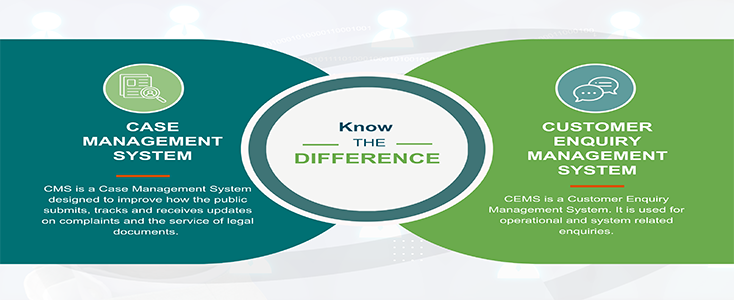
The Companies and Intellectual Property Commission (CIPC) is pleased to announce the launch of its new Case Management System (CMS), a modern digital platform designed to improve how the public submits and tracks complaints and legal documents.
- Details
- Written by: CIPC
- Category: Uncategorised
- Hits: 43
Registering a co-operative
A very simple definition of a co-operative would be to say it is a business where a group of people get together voluntary to address their common needs.
A co-operative is a distinct form of enterprise that provides services and/or products to its members. Profit, known as surpluses in a co-operative, is divided among members in relation to the amount of the business each member did with the co-operative.
By registering a co-operative, you are creating a legal entity with powers and responsibilities as prescribed in the amended Co-operatives Act 6 of 2013. Before registering a co-operative, take note of the importance of record-keeping that need to be done by a co-operative.
Before you decide to register a co-operative, you need to have a formation meeting to decide on a common purpose and agree to register a co-operative. At the formation meeting, the members have to decide on the form and type of co-operative. There must be at least five natural persons or two juristic persons or a combination of any five persons in order to form a primary co-operative.
Types of co-operatives
Co-operatives may take the form of primary, secondary or tertiary co-operatives. The types of co-operatives include agricultural, marketing, housing, financial services, consumer, service, crafts and burial societies etcetera.
Primary Co-operative
A primary Co-operative is formed by a minimum of five natural persons; or two juristic persons or a combination of any five persons.
Note: Primary co-operative, Secondary and Tertiary co-operative can only be registered online
Primary co-operative registration accept card payment method only
Secondary Co-operative
Secondary co-operatives are formed when two or more operational primary co-operatives come together because they are involved in similar activities and want to promote their services in the sector in which they operate.
Tertiary Co-operative
Tertiary co-operatives are formed by two or more operational secondary co-operatives which come together to promote the interests of their members to government bodies, the private sector and other stakeholders.
National apex Co-operative
A National Apex is formed by three operational sectoral tertiary co-operatives that operate on a national level; and five operational multi-sectoral tertiary co-operatives that operate on a provincial, district or local level.
N.B Operational means a co-operative that has held its annual general meeting and has submitted its annual report, audited report or independent reviewed report to the registrar in its financial year.
Note: You can apply for Secondary and Tertiary co-operative online, to apply for co-operative click here
Click here for the CIPC service standards. Service Standard is dependent on payment for the transaction being made.
For enquiry send an email to:
Checklist for registration of a co-operative:
To register as a customer for primary, secondary, and tertiary co-operative click here
You may also follow a step-by-step guide.
To register as a customer for conversion and maintenance of a co-operative click here
Co-operative registration only accepts Card payment method
NB: Funds deposited into customer code will not be accepted.
- Before registering a co-operative, a formation meeting needs to be held with all persons that are interested in establishing the co-operative
- The chairperson outlines the aims and objectives of the proposed co-operative
- The chairperson answers all the arising questions
- The chairperson invites everyone to join
- Those interested should be given an application form for Membership to complete
- The persons that have completed the above-mentioned application form decide how many persons will be required to manage the co-operative
- The members will then elect the board of directors (the board of directors will be the management or steering committee of the co-operative)
Also discuss and agree on the following:
- The objectives (exactly what the co-operative will do)
- The equipment, premises and other materials needed by the enterprise
- Where will the premises (co-operative office) be located
- How will the co-operative be financed? How will the funds be obtained?
- Draw-up an initial business plan
- Choose a name for the co-operative (propose and choose alternative names).
Appointment of Board of Directors
The founding members must elect the board of directors. The board of directors will elect the Chairperson, Secretary and Treasurer.
Section 3: A co-operative must comply with co-operatives principles. E.G VOTING RIGHTS (ONE MEMBER ONE VOTE PRINCIPLE)
Category A and B primary co-ops, each member has only one vote
- Members of Category C, primary co-op, secondary, tertiary, or the national apex, however, have additional voting rights.
- The existing voting rights contained in Category Cs constitutions of primary, secondary, and tertiary co-operative shall remain in force.
- All co-operatives must comply with the prescribed principle of good governance.
The constitution of a co-operative is the document which contains all the rules for how the co-operative should be structured and managed. The constitution should include:
- Official document – Procedures and Regulations in the Constitution
- Meetings
- Membership
- General Matters
- The Annual General Meeting (AGM)
- The Board of Directors
- Decision making
- Management
- Finances
- Any other rules that agree with the Co-operative principles
Every member has to read the constitution of the Co-operative carefully and understand all the regulations in it. Alternatively, the Board of Directors must explain all the rules of the constitution to the members and ensure that they understand them.
The constitution of the co-operative must be signed by all members and must be submitted with the application.
Model constitutions for co-operatives:
- Model Constitution for Primary Agricultural Co-operatives
- Model Constitution for Primary Non-Specific Co-operatives
- Model Constitution for Primary Housing Co-operatives
- Model Constitution for Primary Worker Co-operatives
- Model Constitution for Secondary Co-operatives
- Model Constitution for Housing Primary Co-operative
- Model Constitution for Tertiary Co-operatives
- Model Constitution for Financial Co-operative
- Model Constitution for Social Co-operative
(a) Primary Co-operative an application to register a primary co-op must be made by a minimum of –
(i) Five natural persons
(ii) Two juristic persons
(iii) A combination of any five persons
(b) A secondary co-operative must be formed by two or more operational primary co-operatives.
(c) A tertiary co-operative must be formed by two or more operational secondary co-operatives.
(d) National Apex co-operative must be formed by – three operational sectoral tertiary co-operative that operates on a national level and five operational multi-sectoral tertiary co-operatives that operated on a provincial, district, or local level.
N.B Operational means a co-operative that has held its annual general meeting and has submitted its annual report, audited report, or independent reviewed report to the registrar in its financial year.
To register a Primary, Secondary, and Tertiary Co-operative click here.
An application to register a co-operative must be made by-
- For a Primary, a minimum of five natural persons; or two juristic persons; or a combination of any five persons.
- For a Secondary, a minimum of two operational primary co-operatives
- For a tertiary, a minimum of two operational secondary co-operatives
- For a National Apex, a minimum of three operational sectoral tertiary co-operatives that operate on a national level; and five operational multi-sectoral tertiary co-operatives that operate on a provincial, district or local level.
Operational means a Co-operative that has held its annual general meeting and has submitted its annual report audited report or independent reviewed report as applicable to the registrar in its last financial year.
- Step by step by guide for Primary Co-operative
- Step by step by guide for Secondary Co-operative
- Step by step guide for Tertiary Co-operative :
Note: Primary, Secondary, and Tertiary Co-operative registration accept card payment method only.
- Details
- Written by: CIPC
- Category: Uncategorised
- Hits: 11
- Details
- Written by: CIPC
- Category: Uncategorised
- Hits: 44
A company can be converted to a co-operative (Section 66 of the Co-operative Act (Act 14 of 2005).
A constitution must be submitted as part of the application. Select a relevant model constitution from our website and download the constitution and complete all the blank spaces. The last page of the constitution must be signed by all the founder members of the co-operative. Please note that you need to keep your original constitution. Scan and e-mail the completed and signed documents together with supporting information to
The following supporting documents must be included in your e-mail:
- CO-OP 1
- CO-OP 6.4
- Model Constitutions
- Schedule of contact information (email address and cell number) for all members
A sworn statement by a person who acted as the chairperson of the general meeting:
- that the meeting has passed a resolution authorising the conversion of the company into a co-operative of the required kind and form;
- that the meeting was specially convened to consider the resolution; and
- that the chairperson has satisfied himself or herself that proper notice of the meeting was given to the members of the company;
- A copy of the resolution and reasons for the conversion
- Proof of the company registration
- Certified copies of the company’s memorandum and articles of association/Memorandum of Incorporation
- One copy of the proposed new co-operative constitution
- Certified copy of the company’s latest audited financial statements
- A schedule containing the full names and addresses of the company, the number and class of shares held by each one of them in the company and the occupations of the members
- A schedule containing the full names and addresses of the directors of the company
- A schedule stating the extent of the company’s interest in other companies.
- Written notice of at least three months of the proposal has been given to each known creditor who has a claim exceeding one thousand rands
NB: Lodgement of a passport copy is only accepted as proof of identity for non-residents of South Africa. For South African residents a green bar-coded/ smart ID copy must be lodged.
E-mail:
- Details
- Written by: CIPC
- Category: Uncategorised
- Hits: 17
Within 15 days after the Annual General Meeting (AGM), Category B primary co-operative must submit a completed notice of appointment of an independent reviewer form (Form CO-OP4), Category C primary co-operative must submit a completed notice of appointment of an auditor form.
Secondary co-operative must submit completed notice of appointment of an auditor form (Form CO-OP4)
Tertiary co-operative must submit completed notice of appointment of an auditor form (Form CO-OP4)
National Apex co-operative must submit completed notice of appointment of an auditor form (Form CO-OP4)
To appoint or effect changes to the auditors
Within 15 days after the Annual General Meeting (AGM), Category B primary co-operative must submit a completed notice of appointment of an independent reviewer form (Form CO-OP4), Category C primary co-operative must submit a completed notice of appointment of an auditor form.
Secondary co-operative must submit completed notice of appointment of an auditor form (Form CO-OP4)
Tertiary co-operative must submit completed notice of appointment of an auditor form (Form CO-OP4)
National Apex co-operative must submit completed notice of appointment of an auditor form (Form CO-OP4)
Scan and e-mail the completed and signed documents together with supporting information to
To appoint or effect changes to the auditors, follow these steps:
- Register a customer code
- If you are already registered as a customer and know your customer code and password, proceed to the next step.
- Complete form CO-OP4.
- Letter of consent of appointment as an auditor or independent reviewer
E-mail:
Useful Resources
Legal
Other
Need Help
Connect With Us
Download our App