
Grassroots innovation journey spotlights new pathways
Creating impact in the innovation ecosystem and reaching disadvantaged communities has been central to the Inventor Assistance Program (IAP), helping turn innovative ideas into commercial assets. The IAP is the World Intellectual Property Organization’s (WIPO) flagship project, launched in partnership with the Companies and Intellectual Property Commission (CIPC).
Read more: Grassroots innovation journey spotlights new pathways
Young Ideas — South Africa’s Future Gold Standard, CIPC IP Youth Awards 2026
The Companies and Intellectual Property Commission (CIPC) is proud to announce that they will be hosting the CIPC Intellectual Property (IP) Youth Awards 2026. The Competition is a dynamic platform designed to celebrate bold thinking, fresh innovation, and the next generation of business leaders.
Read more: Young Ideas — South Africa’s Future Gold Standard, CIPC IP Youth Awards 2026
dtic, CIPC AND SPU to host the 6th annual intellectual property and technology commercialisation colloquium
Key stakeholders from government, academia and business will convene in Kimberley, Northern Cape, for a colloquium aimed at strengthening South Africa’s innovation and technology commercialisation ecosystem and unlocking new economic opportunities.
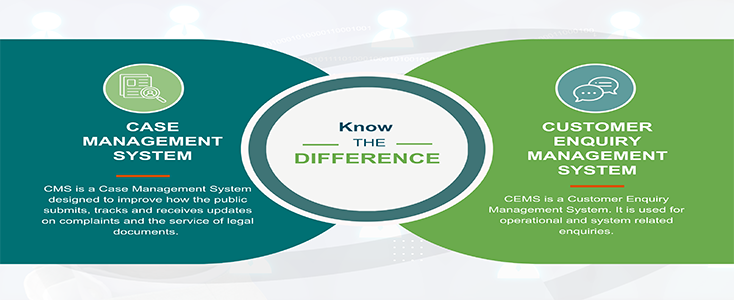
CIPC launches a Case Management System
The Companies and Intellectual Property Commission (CIPC) is pleased to announce the launch of its new Case Management System (CMS), a modern digital platform designed to improve how the public submits and tracks complaints and legal documents.
- Details
- Written by: CIPC
- Category: Uncategorised
- Hits: 22
After registration, a co-operative has to convene an annual general meeting (AGM) within 18 months of registration.
At the first AGM of your co-operative you must:
- Appoint an auditor or independent reviewer
- Elect the Directors
- Elect the supervisory committee, if required by the constitution
- Decide on the future business of the Co-operative
- Take minutes
After that, all further Annual General Meetings must be held within 6 months after the end of a Co-operative’s financial year as stated in the Constitution.
At all the other Annual General Meetings the Co-operative must do the following:
- The Board of Directors must present a financial report or independent reviewed report on the past financial year together with the Annual Financial Statements (AFS)
- Approve the report and the Annual Financial Statements (AFS) or independent reviewed report.
- Elect Directors, if required by the constitution
- Elect the supervisory committee, if necessary
- Decide on matters relating to the business and activities of the co-operative
- Details
- Written by: CIPC
- Category: Uncategorised
- Hits: 23
Category B co-operative must appoint an independent reviewer and category C co-operative must appoint an auditor and complete form CO-OP4
An audit is a financial evaluation that is done by a qualified and registered accountant to check that the financial affairs of the Co-operative are being correctly and honestly managed. The person or company that carries out the audit is called an auditor.
The duties of an auditor include the following:
- Make sure that the Co-operative keeps accurate Annual Financial Statements (AFS).
- Make sure that the financial records of the Co-operative follow the requirements of the Constitution and the Co-operative Act.
- Make sure that the assets and property of the Co-operative are properly managed.
- Attend meetings of the Co-operative where financial matters are discussed.
- Collect any information needed for the audit.
- Report on whether the Co-operative is following the seven Co-operative principles.
- Report on any other financial matters.
- Submit an annual auditor’s report and Annual Financial Statements (AFS) to the Co-operative.
Follow the steps below on how to update the auditors of the co-operative
Within 15 days after the Annual General Meeting (AGM), Category B primary co-operative must submit a completed notice of appointment of an independent reviewer form (Form CO-OP4), Category C primary co-operative must submit a completed notice of appointment of an auditor form. Category B co-operative has to submit notice of appointment of an independent reviewer. (Form CO-OP4).
Secondary co-operative must submit completed notice of appointment of an auditor form (Form CO-OP4)
Tertiary co-operative must submit completed notice of appointment of an auditor form (Form CO-OP4)
National Apex co-operative must submit completed notice of appointment of an auditor form (Form CO-OP4)
Scan and e-mail the completed and signed documents together with supporting information to
To appoint or effect changes to the auditors, follow these steps:
- Register a customer code
- If you are already registered as a customer and know your customer code and password, proceed to the next step.
- Complete form CO-OP4.
- Letter of consent of appointment as an auditor or independent reviewer
E-mail:
- Details
- Written by: CIPC
- Category: Uncategorised
- Hits: 22
The Board of Directors must file their Annual Returns and will be required to upload the following: Financial Statements/Independently Reviewed Report/Directors Annual Report, fully complete Co-oP7 and Capture Co-oP8 (Statistical record); (whichever is applicable) within 15 days after approval and signature of the Annual General meeting.
Steps to file/Pay your Annual Returns
Register as a CIPC Customer
If you are already registered as a customer and know your customer code and password, you can login into New e-services portal
- Details
- Written by: CIPC
- Category: Uncategorised
- Hits: 22
1. A registered co-operative must keep (in terms of the Co-operatives Act, 2005 as amended, Section 21) the following at its offices:
- Its Constitution, including any amendments thereto.
- The minutes of General Meetings in a Minute Book.
- The minutes of meetings of the Board of Directors in a Minute book.
List of Members / Register of Members setting out:
i. the name and address of each member.
ii. the date on which each member became a member.
iii. if applicable, the date on which a person’s membership was terminated
iv. the amount of any membership fees paid, the number of membership shares owned and the number and amount of member loans.
A Register of Directors setting out:
i. the name, address, and identity number of each director, including former directors.
the date on which such directors became or ceased to be directors.
ii. the name and address of any other co-operative, company, or close corporation where both present and former directors are, or were, directors or members.
- A Register of Director’s interest in contracts or undertakings.
- Adequate Accounting Records, including records reflecting the transactions between each member and the co-operative for the purpose of calculating the patronage proportion.
2. The co-operative must keep its accounting records
- for a period of five years after the end of the financial year to which they relate, in the case its main object involves its members conducting transactions with it.
- for a period of three years after the end of the financial year to which they relate, in the case, its main object does not involve its members conducting transactions with it.
Access to information of Co-operative
- Subject to the paragraph below, members of the co-operative may examine the records referred to in paragraphs above during normal business hours of the co-operative and may make copies thereof after payment of a fee.
- Subject to the Promotion of Access to Information Act, 2000, the Board of Directors may, for a reasonable period of time, refuse information relating to any commercial transaction of the co-operative if there are reasonable grounds to believe that the disclosure may be to the disadvantage of the co-operative.
- Where the constitution of a co-operative provides for the establishment of a supervisory committee, the supervisory committee must determine whether the Board of Directors is entitled to withhold information in terms of the paragraph above.
NOTE: Before considering registering a Co-operative, visit your local Small Enterprise Development and Finance Agency (SEFDA) Office for the following services:
- Pre-incorporation & Co-operative Management Training
- Assistance with business planning
Useful Resources
Legal
Other
Need Help
Connect With Us
Download our App