
Grassroots innovation journey spotlights new pathways
Creating impact in the innovation ecosystem and reaching disadvantaged communities has been central to the Inventor Assistance Program (IAP), helping turn innovative ideas into commercial assets. The IAP is the World Intellectual Property Organization’s (WIPO) flagship project, launched in partnership with the Companies and Intellectual Property Commission (CIPC).
Read more: Grassroots innovation journey spotlights new pathways
Young Ideas — South Africa’s Future Gold Standard, CIPC IP Youth Awards 2026
The Companies and Intellectual Property Commission (CIPC) is proud to announce that they will be hosting the CIPC Intellectual Property (IP) Youth Awards 2026. The Competition is a dynamic platform designed to celebrate bold thinking, fresh innovation, and the next generation of business leaders.
Read more: Young Ideas — South Africa’s Future Gold Standard, CIPC IP Youth Awards 2026
dtic, CIPC AND SPU to host the 6th annual intellectual property and technology commercialisation colloquium
Key stakeholders from government, academia and business will convene in Kimberley, Northern Cape, for a colloquium aimed at strengthening South Africa’s innovation and technology commercialisation ecosystem and unlocking new economic opportunities.
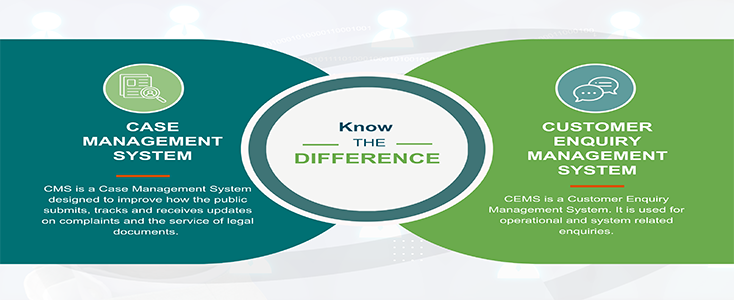
CIPC launches a Case Management System
The Companies and Intellectual Property Commission (CIPC) is pleased to announce the launch of its new Case Management System (CMS), a modern digital platform designed to improve how the public submits and tracks complaints and legal documents.
- Details
- Written by: CIPC
- Category: Uncategorised
- Hits: 21
GUIDELINES
PRACTICE NOTES:
- Guidelines with Regard to the Lodging of Non-Traditional Trade Marks (1 January 2009)
- Notice on Electronic Lodgement of Priority Documents (28 August 2013)
- Notice on Operational E-Filing for Trade Marks: New Applications (28 August 2013)
- Notice on Electronic Lodgement of Opposition Documents (2 September 2013)
- Notice on Naming Conventions Applicable to Electronic Lodgement of New Trade Mark Applications (1 November 2013)
- Notice on Numbering of Trade Mark Applications (11 March 2015)
- Notice on Size Restrictions Applicable to Images Accompanying New Figurative Trade Marks Lodged Electronically (11 November 2015)
- Notice on Obtaining Copies of Trade Mark Related Documents Electronically (21 March 2016)
- Notice on Issuing of Renewal Reminder Notices (27 July 2016)
- Notice on Issuing of Official Actions (30 August 2016)
- Notice on 11th Edition of NICE Classification (24 November 2016)
- Notice on Issuing of Notices of Acceptance (5 June 2017)
- Notice on the Examination Guidelines on Trade Mark Applications (28 February 2017)
- Notice on the Examination Guidelines on Trade Mark Applications – Version 2 (30 October 2017)
- Notice on 11th Edition (Version 2018) of NICE Classification (12 December 2017)
- Notice on CIPC IP Online Enhancements (21 December 2017)
- Notice on Operational E-Filing for Trade Marks: Renewals and Restorations (31 January 2018)
- Notice on 11th Edition (Version 2019) of NICE Classification (25 February 2019)
- Notice on the Examination Guidelines on Trade Mark Applications – Version 3 (20 March 2019)
- Notice on the Examination Guidelines on Trade Mark Applications – Version 3A (6 August 2019)
- Notice on the Operational Requirements in respect of Electronic Lodgement of Caveats (28 November 2019)
- Notice on 11th Edition (Version 2020) of NICE Classifications (13 December 2019)
- Notice on the Operational Requirements for the Electronic Lodgement of Lodging of Trade Mark Priority (Convention) Documents, either with or without Power/s of Attorney (9 March 2021)
- Notice on the Operational Requirements for the Electronic Lodgement of Trade Mark Requests for Allocation of General Powers of Attorney (GPA) Numbers (24 February 2021)
- Notice on the Operational Requirements for the Electronic Lodgement of Trade Mark Requests for 1st Extensions of Time to Oppose Trade Marks Applications (9 March 2021)
- Notice on the Operational Requirements in respect of the Electronic Lodgement of Requests for Extensions of Time to Prosecute Trade Mark Applications (24 February 2021)
- Notice on Issuing of Trade Mark Notifications of Alterations (Amendments) (24 February 2021)
- Notice on the 11th Edition (Version 2021) of the NICE Classification (24 February 2021)
- Notice on the 11th Edition (Version 2022) of the NICE Classification (20 January 2022)
- Notice on issuing of Trade Mark Certificates (12 April 2022)
- Notice on the 12th Edition (Version 2023) of the NICE Classsification (31 January 2023)
- Notice on Trade Mark Requests for Certified Extracts (31 July 2023)
- Notice on the 12th Edition (Version 2024) of the NICE Classification (6 December 2023)
- Notice on the 12th Edition (Version 2025) of the NICE Classificatrion (20 January 2025)
- Notice on trade mark A.I. image search functionality and increase of commercial trade mark e-searching fees (26 August 2025)
- Notice on the 13th Edition (Version 2026) of the NICE Classification (9 December 2025)
- Details
- Written by: CIPC
- Category: Uncategorised
- Hits: 15
Requesting of files and obtaining of copies of documents from files
- All requests for files, perusal of files, and obtaining copies from files, must be directed to Tsholanang Thekiso via email only, at
This email address is being protected from spambots. You need JavaScript enabled to view it. . - Such requests need to indicate (a) which documents are required from the file/s, and (b) the customer code of the requestor.
- The office will then request the file/s from the off-site storage facility, make the required copies and email same to the requestor.
- The requestor will be billed for the retrieval of the file/s as well as the copies, in line with the fees prescribed in the Regulations for both these activities.
- Copies will be made available within 5 working days of the file/s having been received from the off-site storage facility.
- Also in the case of voluminous files where the copies cannot be emailed, the requestor will be advised via email of a date and time upon which the copies may be collected from the Division.
- In instances where perusal of files are requested, the requestor will be advised via email of a date and time upon which the files may be perused at the dtic campus.
IMPORTANT
The above outlined process should not be used where certain documents are available electronically, at no additional cost, as set out in Practice Note 1 of 2016 published by CIPC on 31 March 2016. Where documents are available electronically customers are to use such self-service facility in order to obtain copies of the required documents directly from the CIPC website at no costs, and without directing requests to the Trade Marks Division.
- Details
- Written by: CIPC
- Category: Uncategorised
- Hits: 20
Customers must visit the CIPC paper based disclosure centre at 202 Esellen str, 2nd floor and request the file from the CIPC official in charge.
- Details
- Written by: CIPC
- Category: Uncategorised
- Hits: 17
Customs authorities are a key player in the fight against piracy and counterfeiting.
The majority of infringing goods flooding the markets today are not manufactured in the country where the products are sold, and therefore must at some point make their way across borders. National provisions in line with international treaties, notably the Trade Related Aspects of Intellectual Property Rights (TRIPS) Agreement, provide the basic requirements for border measures, and equip customs authorities with the power to suspend release of infringing goods into the stream of commerce.
Right holders who have valid grounds for suspecting that they are faced with immediate or future importation of counterfeit or pirated goods are entitled to lodge an application for action with the competent customs authority. Legal provisions, which may be included in the national customs legislation concern details about transparency and due process with which such border measures must conform. Establishing international standards for customs control is not an easy task. Ongoing training of customs officials to enhance their understanding to the challenges of today’s international piracy and counterfeit trafficking certainly is essential for effective action. In addition, cooperation at the international level has become vital in this respect.
Countries have started to cooperate in various ways, on regional levels or through bilateral agreements. In addition, cooperation with industry, business associations and the private sector in general, has been identified as being tremendously important for further improving the efficiency of the customs authorities.
Finally, in carrying out their tasks in examining and identifying infringing goods, and monitoring respective results, customs authorities also contribute to a better understanding and analysis of the constantly changing nature of pirated and counterfeit goods.
Useful Resources
Legal
Other
Need Help
Connect With Us
Download our App