
Grassroots innovation journey spotlights new pathways
Creating impact in the innovation ecosystem and reaching disadvantaged communities has been central to the Inventor Assistance Program (IAP), helping turn innovative ideas into commercial assets. The IAP is the World Intellectual Property Organization’s (WIPO) flagship project, launched in partnership with the Companies and Intellectual Property Commission (CIPC).
Read more: Grassroots innovation journey spotlights new pathways
Young Ideas — South Africa’s Future Gold Standard, CIPC IP Youth Awards 2026
The Companies and Intellectual Property Commission (CIPC) is proud to announce that they will be hosting the CIPC Intellectual Property (IP) Youth Awards 2026. The Competition is a dynamic platform designed to celebrate bold thinking, fresh innovation, and the next generation of business leaders.
Read more: Young Ideas — South Africa’s Future Gold Standard, CIPC IP Youth Awards 2026
dtic, CIPC AND SPU to host the 6th annual intellectual property and technology commercialisation colloquium
Key stakeholders from government, academia and business will convene in Kimberley, Northern Cape, for a colloquium aimed at strengthening South Africa’s innovation and technology commercialisation ecosystem and unlocking new economic opportunities.
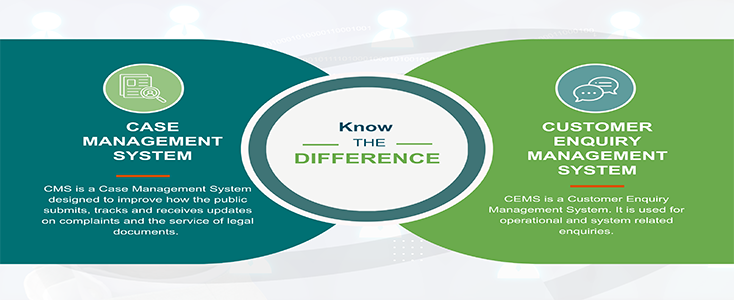
CIPC launches a Case Management System
The Companies and Intellectual Property Commission (CIPC) is pleased to announce the launch of its new Case Management System (CMS), a modern digital platform designed to improve how the public submits and tracks complaints and legal documents.
- Details
- Written by: CIPC
- Category: Uncategorised
- Hits: 16
Civil remedies are not the only way of enforcing intellectual property rights. Most countries provide for criminal proceedings in cases of deliberate infringements or infringements done for commercial purpose or which have resulted in particular harm to the right holder.
Art. 61 of the Trade Related Aspects of Intellectual Property Rights (TRIPS) Agreement requires Member States to provide for criminal procedures and penalties in cases of willful trade mark counterfeiting and copyright piracy on a commercial scale.
Such penalties, according to the TRIPS Agreement, must include imprisonment and/or monetary fines which are sufficient to deter from infringement and, in appropriate cases, seizure, forfeiture and destruction of the infringing goods and related materials. Members are free to add criminal procedures for other infringements of IP rights, in particular if they are committed willfully and on a commercial scale.
If a right holder finds out that their rights have been infringed upon in a manner that is criminal according to the applicable national law, he may contact the police or other competent authority. The right holder should be prepared to provide the authorities with all available information on the infringement. The authorities will then decide whether to initiate action such as prosecution.
- Details
- Written by: CIPC
- Category: Uncategorised
- Hits: 19
An important first step for a right holder is the careful assessment of the alleged infringement. This examination should address a range of issues, such as whom the infringer is, the impact the infringement may have on his business, the seriousness and the extent of the infringement, or the question of repeated infringement. Generally, it is advisable to seek advice and to try to settle the dispute at an early stage, if possible.
It is encouraged to try settling the situation in a ‘friendly way’ by informing the infringer of the activities in question and pointing out the existence of the right owner’s intellectual property rights. In cases of non-voluntary infringements, an infringer may stop his action upon being informed of the illegality of his behavior. The adequacy of a first notice, however, will depend on the circumstances of a particular case. If the right holder does not have sufficient reason for assuming an infringement, he could become liable for damages resulting from an unjustified warning and subsequent action.
If an infringer does not agree to stop or change his activities, negotiation may become an important element of enforcing one’s rights. Again, the success of such a proceeding will strongly depend on the circumstances of the case. In addition, alternative dispute resolution (ADR) procedures are increasingly recognised as offering an effective means for settling disputes concerning intellectual property.
Often, it may be useful for the right holder to seek professional assistance from an IP attorney or agent before deciding on an appropriate course of action. It may also be useful for a right holder to consider contacting a respective right owner’s association. In areas seriously affected by counterfeiting (increasingly, mass-produced goods such as fashion, sportswear or pharmaceutical products) and piracy (such as music and software business) right owners have formed such organisations in many countries. In the area of copyright, collective management organisations may also be a contact point.
In a number of cases, the right holder will decide to take legal action against the infringer. In most jurisdictions, remedies that may be available to right owners such as injunctions, damages, or provisional measures, will be handled in civil courts. Because of the costs involved in civil litigation, it may be worth considering legal insurance policies in advance, where applicable.
- Details
- Written by: CIPC
- Category: Uncategorised
- Hits: 22
Once you own IP, you are responsible for monitoring the market to ensure you are not being infringed. If you are the victim of infringement it is then up to you to take the appropriate steps – an IP lawyer or attorney can assist you to determine if you are being infringed and the best way to deal with the situation. We are not in charge of monitoring IP infringement – this is your responsibility.
You need to monitor and safeguard your IP. This means letting others know you have a legal right to your IP and, if necessary, defending your rights through legal action. This is to ensure that only you can turn your ideas into a commercial reality.
This is why you’ll see many products containing the ® symbol – this is the owner letting everyone know that they have a registered trade mark. Copyright owners do a similar thing by using the © symbol with their work, while many new products will have patent pending or the patent number displayed.
Infringement
Don’t wait for someone to infringe your IP. Putting a strategy in place to deal with infringement before it happens should be part of your overall protection and commercialisation strategy.
If you find your IP is being copied or used by someone else without your permission, there are a number of actions you can take. Possibilities available to you can range from a letter of warning from you or your attorney – to court action. It is always best to seek professional advice.
Whatever action you do take, pursue it vigorously and make sure any person infringing on your rights knows you are serious about protecting your IP. Any delay could jeopardise your legal rights to take action.
Proof of ownership
Owning IP is like owning physical property. It indicates to others that you have a claim on it, it deters others from infringing upon it and enables you to take legal action against those who do.
To help prove your ownership of IP, keep a record of:
- what kind of right you have, and in what form the right was created
- what, if any, material from a third party was used in the creation process, and whether permission for such use was obtained
- when it was created
- who created it
- evidence of ownership – such as an application for a patent, trade mark or design
- contracts with all parties involved in the creation of the IP that clearly identify who owns the IP
- log books showing how the creation process was undertaken (particularly important for IP created by employees)
- files of early drafts and prototypes that embody IP
- copies of agreements with those on whose behalf you are distributing goods or services. These should include agreements giving distributors the right to use trade marks and marketing material. This evidence should be stored in an IP Register with a back-up copy in a separate location
Infringement of trade marks on the internet
When you trade over the internet, you are entering a global marketplace. There is no such thing as a ‘world’ trade mark. Registration of a trade mark in South Africa does not give you any rights in relation to that trade mark overseas. If you offer goods or services for sale on the internet, you could be sued for infringement in a country where someone else owns the trade mark.
South Africa is a member of the World Intellectual Property Organization (WIPO) which establishes guidelines to protect trade mark owners who trade over the internet.
Be aware of the potential risks you face when trading over the internet. You should seek legal advice on the best ways you can avoid or minimise those risks. Most importantly, you should seek legal advice if you receive notice from an overseas trade mark owner alleging that you are infringing their trade mark via the internet.
Trade mark owners contemplating trading over the internet should consider applying for international trade marks.
- Details
- Written by: CIPC
- Category: Uncategorised
- Hits: 27
Essentially, intellectual property rights are private rights. It is therefore the primary responsibility of the right holder to seek remedies in order to protect those rights. They must monitor the activities of competitors as well as developments in the marketplace, and take action to stop any infringement of rights or obtain recovery of losses.
In serious cases, however, in particular when the infringement of IP rights is intentional and for commercial purposes, many countries will consider such infringements to be criminal, and therefore also provide for action to be taken by the respective authorities.
Accordingly, effective enforcement may require the involvement of a number of persons or entities, such as attorneys, judges, customs, police, prosecutors, administrative authorities, and, in the area of copyright, collective management societies. In many countries, it may also be possible to obtain information and assistance through contacting national organisations or right holder associations concerned with fighting counterfeiting, piracy and other forms of intellectual property infringement.
Useful Resources
Legal
Other
Need Help
Connect With Us
Download our App