
Grassroots innovation journey spotlights new pathways
Creating impact in the innovation ecosystem and reaching disadvantaged communities has been central to the Inventor Assistance Program (IAP), helping turn innovative ideas into commercial assets. The IAP is the World Intellectual Property Organization’s (WIPO) flagship project, launched in partnership with the Companies and Intellectual Property Commission (CIPC).
Read more: Grassroots innovation journey spotlights new pathways
Young Ideas — South Africa’s Future Gold Standard, CIPC IP Youth Awards 2026
The Companies and Intellectual Property Commission (CIPC) is proud to announce that they will be hosting the CIPC Intellectual Property (IP) Youth Awards 2026. The Competition is a dynamic platform designed to celebrate bold thinking, fresh innovation, and the next generation of business leaders.
Read more: Young Ideas — South Africa’s Future Gold Standard, CIPC IP Youth Awards 2026
dtic, CIPC AND SPU to host the 6th annual intellectual property and technology commercialisation colloquium
Key stakeholders from government, academia and business will convene in Kimberley, Northern Cape, for a colloquium aimed at strengthening South Africa’s innovation and technology commercialisation ecosystem and unlocking new economic opportunities.
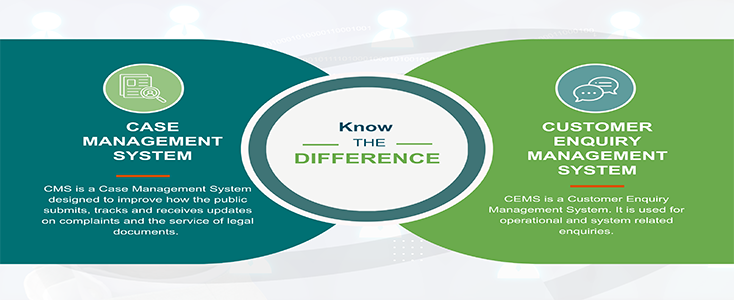
CIPC launches a Case Management System
The Companies and Intellectual Property Commission (CIPC) is pleased to announce the launch of its new Case Management System (CMS), a modern digital platform designed to improve how the public submits and tracks complaints and legal documents.
- Details
- Written by: CIPC
- Category: Uncategorised
- Hits: 15
Regulation 29 of the Companies Act , No. 71 of 2008 deals with the `Independent Review of Annual Financial Statements’.
For the purpose of this Regulation-
- `independent reviewer’, means a person referred to in regulation 29(4) and who has been appointed to perform an independent review under this regulation; and
- `reportable irregularity’, means any act or omission committed by any person responsible for the management of a company, which-
-
- Unlawfully has caused or is likely to cause material, financial loss to the company or to any member, shareholder, creditor or investor of the company in respect of his, her or its dealings with that entity; or
- Is fraudulent or amounts to theft; or
- Causes or has caused the company to trade under insolvent circumstances.
When an independent review of a company’s financial statements must be carried out
Regulation 29 (4) states that `An independent review of a company’s annual financial statements must be carried out-
- In the case of a company whose Public Interest Score for the particular financial year was at least 100, by a registered auditor, or a member in good standing of a professional body that has been accredited in terms of section 33 of the Auditing Professions Act; or
- In the case of a company whose Public Interest Score for the particular financial year was less than 100, by-
-
- A registered auditor, or a member in good standing of a professional body that has been accredited in terms of section 33 of the Auditing Professions Act; or
- A person who is qualified to be appointed as an accounting officer of a close corporation in terms of section 60(1), (2) and (4) of the Close Corporations Act, 1984 (Act 69 of 1984).
Steps to alert CIPC about an “Reportable Irregularity”
- An independent reviewer of a company that is satisfied or has reason to believe that a reportable irregularity has taken place or is taking place in respect of that company must, without delay, send a written report to the Commission. This is known as the `first report’.
- The report must give particulars of the reportable irregularity referred to above and must include such other information and particulars as the independent reviewer considers appropriate.
- The independent reviewer must within three (3) business days of sending the report to the Commission notify the members of the Board of the company in writing of the sending of the sending of the report referred to in regulation 29(6) and the provisions of this regulation.
- The First report of the reportable irregularities (RI’s) from the Independent Reviewer to CIPC must include the letter which was sent to the board of directors notifying them of the reportable irregularity.
- The independent reviewer must as soon as reasonably possible but not later than 20 business days from the date on which the report referred in regulation 29(6) (the first report) was sent to the Commission-
- Take all reasonable measures to discuss the first report with the members of the board of the company;
- Afford the members of the board of the company an opportunity to make representations in respect of the report; and
- A Second Report must be sent by the Independent Reviewer to the Commission within twenty (20) business days from the date of the First report. The second report must include the independent reviewer’s opinion as to whether:
-
- no reportable irregularity has taken place or is taking place; or
- the suspected reportable irregularity is no longer taking place and that adequate steps have been taken for the prevention or recovery of any loss as a result thereof, if relevant; or
- the reportable irregularity is continuing; and the detailed particulars and information supporting his conclusions.
- If the second report from the independent reviewer states that the reportable irregularity is continuing, the Commission must notify the appropriate regulator in writing and provide a copy of the reportable irregularity to them. The Commission may investigate any alleged contravention of the Act.
- Independent Review reports must be e-mailed to:
This email address is being protected from spambots. You need JavaScript enabled to view it.
- Details
- Written by: CIPC
- Category: Uncategorised
- Hits: 15
The following are considered in the calculation of a public interest score:
- a number of points equal to the average number of employees of the company during the financial year;
- one point for every R1 million (or portion thereof) in third party liability of the company, at the financial year end;
- one point for every R1 million (or portion thereof) in turnover during the financial year; and
- one point for every individual who, at the end of the financial year, is known by the company-
- in the case of a profit company, to directly or indirectly have a beneficial interest in any of the company’s issued securities; or
- in the case of a non-profit company, to be a member of the company, or a member of an association that is a member of the company.
- Details
- Written by: CIPC
- Category: Uncategorised
- Hits: 24
In terms of Section 4 of the Companies Act, 2008, there is a solvency and liquidity test.
Solvency relates to the assets of the company, fairly valued, being equal or exceeding the liabilities of the company. Liquidity relates to the company being able to pay its debt as they become due in the ordinary course of business for a period of 12 months.
1. A company satisfies the solvency and liquidity test at a particular time if, considering all reasonably foreseeable financial circumstances of the company at that time
(a) the assets of the company, as fairly valued, equal or exceed the liabilities of the company, as fairly valued; and
(b) it appears that the company will be able to pay its debts as they become due in the ordinary course of business for a period of –
- (i) 12 months after the date on which the test is considered; or
- (ii) in the case of a distribution contemplated in paragraph (a) of the definition of ‘distribution’ in section 1, 12 months following that distribution.
2. For the purposes contemplated in subsection (1)
(a) any financial information to be considered concerning the company must be based on
(i) accounting records that satisfy the requirements of section 28; and
(ii) financial statements that satisfy the requirements of section 29;
(b) subject to paragraph (c), the board or any other person applying the solvency and liquidity test to a company
(i) must consider a fair valuation of the company’s assets and liabilities, including any reasonably foreseeable contingent assets and liabilities, irrespective of whether or not arising as a result of the proposed distribution, or otherwise; and
(ii) may consider any other valuation of the company’s assets and liabilities that is reasonable in the circumstances; and
(c) unless the Memorandum of Incorporation of the company provides otherwise, when applying the test in respect of a distribution contemplated in paragraph (a) of the definition of ‘distribution’ in section 1, a person is not to include as a liability any amount that would be required, if the company were to be liquidated at the time of the distribution, to satisfy the preferential rights upon liquidation of shareholders whose preferential rights upon liquidation are superior to the preferential rights upon liquidation of those receiving the distribution.
- Details
- Written by: CIPC
- Category: Uncategorised
- Hits: 31
Private or personal liability companies that are required to be audited by the Companies Act, 2008 or regulation 28, must file a copy of the latest approved Audited Financial Statements on the date that they file their annual return with the CIPC.
The following private companies are required to have their annual financial statements audited:
- Any private or personal liability company if, in the ordinary course of its primary activities, it holds assets in a fiduciary capacity for persons who are not related to the company, and the aggregate value of such assets held at any time during the financial year exceeds R5 million;
- Any private or personal liability company that compiles its financial statements internally (for example, by its financial director or one of the owners) and that has a Public Interest Score (PIS) of 100 or more;
- Any private or personal liability company that has its financial statements compiled by an independent party (such as an external accountant) and that has a Public Interest Score (PIS) of 350 or more;
Unless the company has opted to have its annual financial statements audited or is required by its Memorandum of Incorporation (MOI) to do so, a private or personal liability company that is not managed by its owners may be subject to independent review if:
- It compiles its financial statements internally and its Public Interest Score (PIS) is less than 100;
- It has its financial statements compiled independently at its Public Interest Score (PIS) is between 100 and 349;
Private or personal liability companies that are not required to have their financial statements audited, may elect to voluntarily file their audited or reviewed statements with their annual returns. If such companies choose not to file a full set of financial statements, they must file a financial accountability supplement with their annual return.
How to file your annual financial statements
- Either Financial Accountability Supplements (FASs) or Annual Financial Statements (AFSs) should be filed via the e-services portal:https://eservices.cipc.co.za/ together with Annual Returns (ARs).
Useful Resources
Legal
Other
Need Help
Connect With Us
Download our App