
Grassroots innovation journey spotlights new pathways
Creating impact in the innovation ecosystem and reaching disadvantaged communities has been central to the Inventor Assistance Program (IAP), helping turn innovative ideas into commercial assets. The IAP is the World Intellectual Property Organization’s (WIPO) flagship project, launched in partnership with the Companies and Intellectual Property Commission (CIPC).
Read more: Grassroots innovation journey spotlights new pathways
Young Ideas — South Africa’s Future Gold Standard, CIPC IP Youth Awards 2026
The Companies and Intellectual Property Commission (CIPC) is proud to announce that they will be hosting the CIPC Intellectual Property (IP) Youth Awards 2026. The Competition is a dynamic platform designed to celebrate bold thinking, fresh innovation, and the next generation of business leaders.
Read more: Young Ideas — South Africa’s Future Gold Standard, CIPC IP Youth Awards 2026
dtic, CIPC AND SPU to host the 6th annual intellectual property and technology commercialisation colloquium
Key stakeholders from government, academia and business will convene in Kimberley, Northern Cape, for a colloquium aimed at strengthening South Africa’s innovation and technology commercialisation ecosystem and unlocking new economic opportunities.
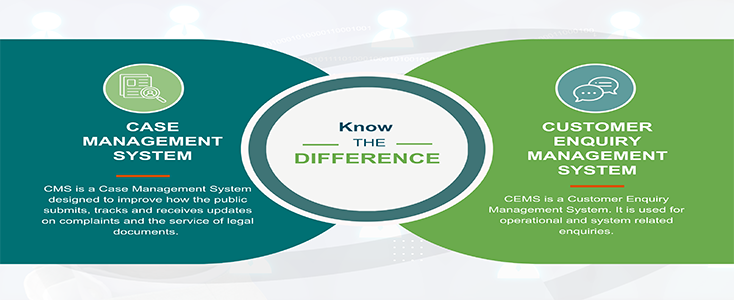
CIPC launches a Case Management System
The Companies and Intellectual Property Commission (CIPC) is pleased to announce the launch of its new Case Management System (CMS), a modern digital platform designed to improve how the public submits and tracks complaints and legal documents.
- Details
- Written by: CIPC
- Category: Uncategorised
- Hits: 12
Basic Search (e-Searching)
- You may conduct a cursory search of the Trade Marks Register to determine if the mark you may wish to use is available to you.
- This search facility only provides basic search information.
- This search facility is free of charge.
Special Search
- You may apply on a form TM2 for a special (preliminary) search in the Trade Marks Register to determine if there are no existing prior rights in an identical or confusingly similar trade mark to your intended mark, which could prevent the registration of yours.
- The form TM2 must be completed as shown on the SAMPLE TM2.
- The cost for a special search is R190.00 and the proof of payment must reach us on or before the date that you apply for the special search.
- This fee is payable for each separate class/es you require the special search to be conducted in.
- A special search is not mandatory but will help you to determine if the mark you may wish to use is indeed available to you.
- The original form TM2 must be submitted to CIPC via post, or courier services, or placed in the drop box outside the CIPC office at the dti Campus, 77 Meintjies Street, Sunnyside, Pretoria.
IP Online
- Should you require more detailed information you can also conduct a trade marks search via IP Online.
- This search facility is not free of charge and fees are payable in line with the prescribed fees in terms of the Trade Mark Regulations.
- Details
- Written by: CIPC
- Category: Uncategorised
- Hits: 9
Basic Search (e-Searching)
- You may conduct a cursory search of the Trade Marks Register to determine if the mark you may wish to use is available to you.
- This search facility only provides basic search information.
- This search facility is free of charge.
Special Search
- You may apply on a form TM2 for a special (preliminary) search in the Trade Marks Register to determine if there are no existing prior rights in an identical or confusingly similar trade mark to your intended mark, which could prevent the registration of yours.
- The form TM2 must be completed as shown on the SAMPLE TM2.
- The cost for a special search is R190.00 and the proof of payment must reach us on or before the date that you apply for the special search.
- This fee is payable for each separate class/es you require the special search to be conducted in.
- A special search is not mandatory but will help you to determine if the mark you may wish to use is indeed available to you.
- The original form TM2 must be submitted to CIPC via post, or courier services, or placed in the drop box outside the CIPC office at the dti Campus, 77 Meintjies Street, Sunnyside, Pretoria.
IP Online
- Should you require more detailed information you can also conduct a trade marks search via IP Online.
- This search facility is not free of charge and fees are payable in line with the prescribed fees in terms of the Trade Mark Regulations.
- Details
- Written by: CIPC
- Category: Uncategorised
- Hits: 29
The lifespan of copyright depends on the type of work protected:
- The copyright of literary works last for 50 years after death of the author.
- The copyright of computer programs last for 50 years after the first copies were made available to the public.
- For sound recordings, the copyright last for 50 years from the day the work was first broadcast.
- For films, 50 years from the date the film was shown.
No infringement results if work is acknowledged when one is copying or citing from another author’s work.
Generally, in respect of written material, the following guidelines apply:
- Wherever possible, the author’s permission should be sought to reproduce his/her work.
- If in an article, paper or speech, when referring to the work of another, it is required that details of the reference be provided in the form of the name of the author and details of his/her publication i.e. title of book or magazine, publisher, date of publication etc.
- If only a small portion of the work is used, say a few sentences or a paragraph, and provided that an acknowledgement is made, permission is not needed.
- If a “significant” section is reproduced, such as a chapter, then permission should be obtained.
- It is generally accepted that work that is being used in academic institutions, research or for private use may be reproduced.
- Details
- Written by: CIPC
- Category: Uncategorised
- Hits: 30
A copyright is an exclusive right granted by law for a limited period to an author, designer, etc. for his/her original work.
Only cinematographic films can be registered with CIPC for copyright purposes. Other materials are copyright-protected automatically upon creation.
Copyright is created by putting the words “copyright” or “copyright reserved” or “copyright Smith 2011” (i.e. copyright, followed by name and the year), or the copyright symbol, name and year e.g. © Meati 2011.
The following works are eligible for copyright protection under Copyright Act:
- Literary works e.g. books and written composition novels;
- Musical works e.g. songs;
- Artistic works e.g. paintings and drawings;
- Cinematograph films e.g. programme-carrying signal that has been transmitted by satellite;
- Sound recordings;
- Broadcasts e.g. broadcasting of films or music;
- Programme-carrying signals e.g. signals embodying a programme;
- Published editions e.g. first print by whatever process; and
- Computer programs.
For a work to be eligible for copyright protection, it must be original and be reduced to material form.
You can obtain copyright protection if you are a citizen of South Africa or if your work was produced in South Africa. For non-citizens, you can obtain copyright protection in South Africa only if the country for which you are a citizen is part of the Berne Convention. The Berne Convention is an international agreement on copyright by which member countries grant each other copyright protection.
Click here to register as a customer.
You may also follow a step-by-step guide.
- R590 for each class category
Patent application:
- R60 for provisional patent application
- R590 for complete patent application or PCT national entry application
Design application:
- R240
Copyright application:
- R510
For bank account details, click here.
Use your 6-character long customer code as a reference when making a deposit.
Forms to complete:
Useful Resources
Legal
Other
Need Help
Connect With Us
Download our App