
Grassroots innovation journey spotlights new pathways
Creating impact in the innovation ecosystem and reaching disadvantaged communities has been central to the Inventor Assistance Program (IAP), helping turn innovative ideas into commercial assets. The IAP is the World Intellectual Property Organization’s (WIPO) flagship project, launched in partnership with the Companies and Intellectual Property Commission (CIPC).
Read more: Grassroots innovation journey spotlights new pathways
Young Ideas — South Africa’s Future Gold Standard, CIPC IP Youth Awards 2026
The Companies and Intellectual Property Commission (CIPC) is proud to announce that they will be hosting the CIPC Intellectual Property (IP) Youth Awards 2026. The Competition is a dynamic platform designed to celebrate bold thinking, fresh innovation, and the next generation of business leaders.
Read more: Young Ideas — South Africa’s Future Gold Standard, CIPC IP Youth Awards 2026
dtic, CIPC AND SPU to host the 6th annual intellectual property and technology commercialisation colloquium
Key stakeholders from government, academia and business will convene in Kimberley, Northern Cape, for a colloquium aimed at strengthening South Africa’s innovation and technology commercialisation ecosystem and unlocking new economic opportunities.
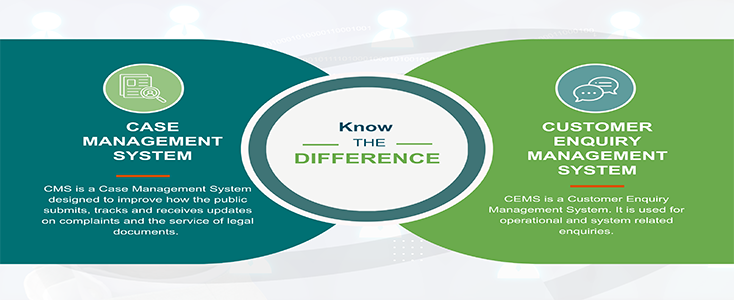
CIPC launches a Case Management System
The Companies and Intellectual Property Commission (CIPC) is pleased to announce the launch of its new Case Management System (CMS), a modern digital platform designed to improve how the public submits and tracks complaints and legal documents.
- Details
- Written by: CIPC
- Category: Uncategorised
- Hits: 36
The lifespan of copyright depends on the type of work protected:
- The copyright of literary works last for 50 years after death of the author.
- The copyright of computer programs last for 50 years after the first copies were made available to the public.
- For sound recordings, the copyright last for 50 years from the day the work was first broadcast.
- For films, 50 years from the date the film was shown.
No infringement results if work is acknowledged when one is copying or citing from another author’s work.
Generally, in respect of written material, the following guidelines apply:
- Wherever possible, the author’s permission should be sought to reproduce his/her work.
- If in an article, paper or speech, when referring to the work of another, it is required that details of the reference be provided in the form of the name of the author and details of his/her publication i.e. title of book or magazine, publisher, date of publication etc.
- If only a small portion of the work is used, say a few sentences or a paragraph, and provided that an acknowledgement is made, permission is not needed.
- If a “significant” section is reproduced, such as a chapter, then permission should be obtained.
- It is generally accepted that work that is being used in academic institutions, research or for private use may be reproduced.
- Details
- Written by: CIPC
- Category: Uncategorised
- Hits: 36
A copyright is an exclusive right granted by law for a limited period to an author, designer, etc. for his/her original work.
Only cinematographic films can be registered with CIPC for copyright purposes. Other materials are copyright-protected automatically upon creation.
Copyright is created by putting the words “copyright” or “copyright reserved” or “copyright Smith 2011” (i.e. copyright, followed by name and the year), or the copyright symbol, name and year e.g. © Meati 2011.
The following works are eligible for copyright protection under Copyright Act:
- Literary works e.g. books and written composition novels;
- Musical works e.g. songs;
- Artistic works e.g. paintings and drawings;
- Cinematograph films e.g. programme-carrying signal that has been transmitted by satellite;
- Sound recordings;
- Broadcasts e.g. broadcasting of films or music;
- Programme-carrying signals e.g. signals embodying a programme;
- Published editions e.g. first print by whatever process; and
- Computer programs.
For a work to be eligible for copyright protection, it must be original and be reduced to material form.
You can obtain copyright protection if you are a citizen of South Africa or if your work was produced in South Africa. For non-citizens, you can obtain copyright protection in South Africa only if the country for which you are a citizen is part of the Berne Convention. The Berne Convention is an international agreement on copyright by which member countries grant each other copyright protection.
Click here to register as a customer.
You may also follow a step-by-step guide.
- R590 for each class category
Patent application:
- R60 for provisional patent application
- R590 for complete patent application or PCT national entry application
Design application:
- R240
Copyright application:
- R510
For bank account details, click here.
Use your 6-character long customer code as a reference when making a deposit.
Forms to complete:
- Details
- Written by: CIPC
- Category: Uncategorised
- Hits: 59
Renew your design
An aesthetic design is valid for one period of 15 years and a functional design is valid for one period of 10 years subject to payment of annual renewal fees starting from the end of the 3rd year from the date of filing.
In case the delay in payment of a renewal fee is more than 6 months, the design will lapse and can be restored by completing a request for restoration in terms of section 23(1)[ Reg. 35(1)], accompanied by an affidavit stating the reasons for the delay. The restoration fee is R 260. Please remember that you have to write your CIPC customer code on the form D18.
The decision for restoration is discretionary. If the restoration is allowed, CIPC publishes the request for restoration in the Patent Journal for opposition purposes, if any. If the request for restoration is not opposed within 2 months from the date of publication in the Patent Journal, CIPC will restore the design upon payment of the outstanding renewal fees. CIPC calculates the outstanding fees and sends notification to the applicant specifying the amount due. If the request for restoration is opposed, CIPC will wait for the outcome of the opposition proceedings and will follow the court order thereof.
After your design is filed, only very limited amendments are allowed. Section 27 of the Act deals with amendments to the application and Section 26 allows for corrections due to clerical errors or obvious mistakes.
Amendments under section 27 of the Act can be made to an application any time before or after the registration of the design.
You may request an amendment to your application for a number of reasons. For example:
• change of ownership in the design
• change in the residential or address for service
• to address deficiencies so that the case can proceed to registration
• an error in the representations
• an error in wording in parts of the application.
Scope of the application
An amendment will not be allowed if it increases the original scope of the application.
This means that amendments that introduce new matter that differs essentially from what was shown in the original application will not be allowed.
Change of name of the applicant
To change the name of the applicant you have to request a change of name on Form D4. No evidence of the change is required to be submitted with your request. Please remember that you have to write your customer code on the form D4.
Change of address for service
To change an address, you should submit your request on Form D4 stating what the new address for service is. No evidence of the change is required to be submitted with your request. In case you are represented by an agent, you have to submit the power of attorney in order to record the new address for service.
Assignment Requests
If the ownership of a design has been assigned to another party, you need to record that assignment in order to be valid with respect to third parties. This is done by completing a request for assignment on form D7 accompanied by assignment documents such as a deed of assignment, merger document or sale agreement or any other document to the satisfaction of the Registrar. These documents must include:
- the exact name of the current owner
- name of the new owner
- date of execution of the assignment
- the design number(s) the assignment relates to
- signatures of the assignor. If there is more then one assignor, all signatures thereof.
Please remember that you have to write your CIPC customer code on the form D7.
If your registered design is infringed, or you believe it is being infringed, you should consider approaching a patent attorney to institute an infringement proceedings before the Commissioner of Patents as the case may be.
You can only enforce your design after the registration, but against any act of infringement that took place after the filing date of the design application.
- Details
- Written by: CIPC
- Category: Uncategorised
- Hits: 52
A Design is about shape and features that appeal to the eye.
Some designs are necessitated by function and others are aesthetic. Design is about the shape, form, pattern, ornamentation and configuration of a product or article.
There are 2 types of designs that one can register:
- An aesthetic design
- Has to be new and original
- Beauty is in its shape, configuration or ornamentation
- Must be able to be produced by an industrial process
- A functional design
- Has to be new and not commonplace
- Where the shape or configuration is necessitated by the function
- Must be able to be produced by an industrial process
The process for applying for registration of your design involves a number of steps.
You need to make sure you understand and complete each step so that your application can be processed quickly and easily.
Protection is afforded to aesthetic designs for one period of 15 years, and to functional designs for one period 10 years.
Registered designs have to be renewed annually before the expiration of the third year, as from the date of lodgment.
Click here to register as a customer.
You may also follow a step-by-step guide.
- R590 for each class category
Patent application:
- R60 for provisional patent application
- R590 for complete patent application or PCT national entry application
Design application:
- R240
Copyright application:
- R510
For bank account details, click here.
Use your 6-character long customer code as a reference when making a deposit.
Complete form D1 – Application and Acknowledgment
It should be lodged (in duplicate for manual filing only)
Enter the classification index (class number) in terms of the Design Classification (Locarno Classification available on the WIPO website).
In case you experience difficulties in defining the classification index, you may apply to the Registrar of Design to do so upon payment of the prescribed fee (R240.00). Please note that you have to write your CIPC customer code on form D1.
Form D2: Register of Designs Complete and lodge (in duplicate for manual filing only)
Form D3: Power of Attorney
Form D6: Definitive Statement (compulsory) and Explanatory Statement (optional except for integrated circuits layout, mask work, or series of mask works where the Explanatory Statement is compulsory) Lodge in duplicate (applicable only for manual filing). The definitive statement should be a description of the features of the design for which protection is sought (e.g. shape, pattern, ornamentation, configuration, as applicable).
Form D8: Publication Particulars Lodge in duplicate (applicable only for manual filing) The “brief statement of features” shall be a single paragraph of not more than 100 words. Essentially this is a combination of the definitive and explanatory statement (as per D6 ) Together with the documentation listed above, “Representations” in the form of drawings, or photographs need to be included. These could be 7 identical representations (only 1 representation is required for e-filing), either drawings or photographs. Each drawing should be on an A4 paper, or each photograph mounted on A4 paper..
Enclose different perspectives (as applicable) e.g. top view, side view, front view, 7 of each are required. Select one view for publication and provide 2 copies clearly indicating “for publication”. All drawings/photographs except those designated for publication should be signed. Important: Please note that multiple copies are not applicable to e-filing. Submit the design application and supporting documents by either posting the applications or dropping off the application in the drop-off box at the CIPC Self Help Terminals at Sancardia Mall, 1st floor.
Useful Resources
Legal
Other
Need Help
Connect With Us
Download our App