
Grassroots innovation journey spotlights new pathways
Creating impact in the innovation ecosystem and reaching disadvantaged communities has been central to the Inventor Assistance Program (IAP), helping turn innovative ideas into commercial assets. The IAP is the World Intellectual Property Organization’s (WIPO) flagship project, launched in partnership with the Companies and Intellectual Property Commission (CIPC).
Read more: Grassroots innovation journey spotlights new pathways
Young Ideas — South Africa’s Future Gold Standard, CIPC IP Youth Awards 2026
The Companies and Intellectual Property Commission (CIPC) is proud to announce that they will be hosting the CIPC Intellectual Property (IP) Youth Awards 2026. The Competition is a dynamic platform designed to celebrate bold thinking, fresh innovation, and the next generation of business leaders.
Read more: Young Ideas — South Africa’s Future Gold Standard, CIPC IP Youth Awards 2026
dtic, CIPC AND SPU to host the 6th annual intellectual property and technology commercialisation colloquium
Key stakeholders from government, academia and business will convene in Kimberley, Northern Cape, for a colloquium aimed at strengthening South Africa’s innovation and technology commercialisation ecosystem and unlocking new economic opportunities.
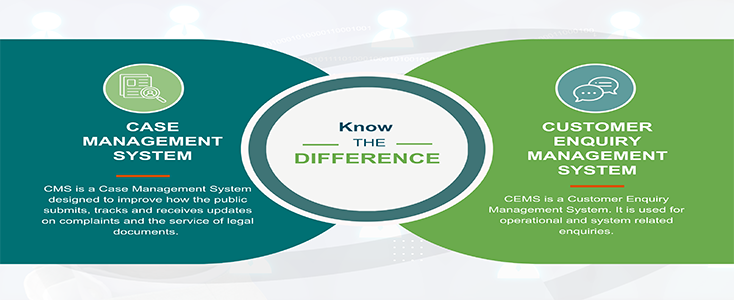
CIPC launches a Case Management System
The Companies and Intellectual Property Commission (CIPC) is pleased to announce the launch of its new Case Management System (CMS), a modern digital platform designed to improve how the public submits and tracks complaints and legal documents.
- Details
- Written by: CIPC
- Category: Uncategorised
- Hits: 51
Renewal of a Patent must be done every year starting from the end of the 3rd year from the filing date for the duration of the patent.
- Renewal request to be filed on form P10. Please remember that you have to write your CIPC customer code on the form P10.
- Renew every year on or before the expiration of the 3rd year from the filing date. You can also pay the renewal fee plus fine within 6 months after the due date. Thereafter your patent will lapse due to non-payment of the renewal fee. To restore it, you will have to follow a restoration procedure in terms of the Patent Act and the Regulations thereof.
- A patent is renewable up to the expiration of its term, i.e within 20 years from the filing date. Thereafter it expires irrevocably.
- The amount due for the respective renewal fee can be seen from item 7 of the Patents Table of Fees.
NB: If your customer details such as your name or address have changed you will need to advise us in writing prior to completing your renewal.
In case the payment has been delayed but no longer than 6 months from the due date, item 6 of the patents Table of Fees applies and a fine of R90 must be paid for the first month plus R50 thereafter for each month or a part thereof ( not exceeding five months) in addition to the renewal fee.
In case the delay in payment of a renewal fee is more than 6 months, the patent will lapse and can be restored by completing a request for restoration in terms of section 47(1)[ Reg. 49] and payment of restoration fee of R282, accompanied by an affidavit stating the reasons for the delay. The decision for restoration is discretionary. If the restoration is allowed, CIPC publishes the request for restoration in the Patent Journal for opposition purposes. If the request for restoration is not opposed within 2 months from the date of publication in the patent Journal, CIPC will restore the patent upon payment of the outstanding renewal fees. The office calculates the outstanding fees and sends notification to the applicant specifying the amount due. If the request for restoration is opposed, the Office will wait for the outcome of the opposition proceedings and will follow the court order thereof.
Patent protection is enforceable through civil proceedings. CIPC cannot launch legal proceedings on your behalf. You must put appropriate safeguards in place, maintain secrecy, communicate your legal rights and, if necessary, defend your rights through legal action.
Do not wait for someone to infringe your patent. Put a strategy in place to deal with infringement before it happens and make it part of your overall protection and commercialisation strategy.
If you find your patent is being copied or used by someone else without your permission, there are a number of actions you can take. These range from a letter of demand from your attorney, negotiations to settle out of court and if this fails, court action.
Whatever action you take, pursue it vigorously and make sure any infringer knows you’re serious about protecting your patent. Delay could also jeopardise your legal rights to obtain an injunction. For help with handling infringement, speak to IP professional.
A patent ownership dispute can take several forms:
- a dispute between applicants, where the Commissioner of Patents decides if an application is to continue in the name of either one or more of the applicants, or indicates how else the application is to continue.
- a dispute filed by one or more persons stating they are the owners of the patent application, where the Commissioner decides whether the applicant or the other persons (or both) are the owners.
- an application to dispute the ownership by a person who does not own the invention, stating that the applicant also does not own it and that a patent cannot be granted to that person.
- a dispute filed by one or more persons stating that their entitlement to a patent is not properly recorded in the Register of Patents.
Where someone other than the applicant is found to be the correct owner of the patent application, there are a few possible outcomes. The application may be refused, the other person may be named as the applicant, or the right applicant(s) may make a new patent application which maintains the priority date of the other application.
The Commissioner of Patents may make a decision on ownership even if the application is lapsed or is withdrawn.
Seek professional advice for an ownership dispute
The process of contesting ownership is potentially complex and costly and any mistake could lead to the opposing party gaining an advantage. If you become involved in an ownership dispute, you might consider contacting a patent attorney experienced in intellectual property law.
Dealing with oppositions
A patent registration can not be opposed in terms of the current patent legislation.
Actions under the patent legislation that can be opposed are the following (list not exhaustive):
- an application by the patentee to amend the patent specification
- an application by the patentee for amendment of the patent claims
- an application for restoration
- an application for a license to use an invention.
GRANTING OF PATENTS CANNOT BE OPPOSED IN SOUTH AFRICA
- Details
- Written by: CIPC
- Category: Uncategorised
- Hits: 93
A patent is an exclusive right granted for an invention, which is a product or a process that provides a new way of doing something, or offers a new technical solution to a problem.
A patent provides protection for the owner, which gives him/her the right to exclude others from making, using, exercising, disposing of the invention, offering to dispose, or importing the invention. The protection is granted for a limited period of 20 years.
A patent may be granted for any new invention which involves an inventive step and which is capable of being used or applied in trade and industry or agriculture. These include inventions such as appliances, mechanical devices and so on. However, you may not protect things such as:
- Computer programmes
- Artistic works
- Mathematical methods and other purely mental processes
- Games
- Plans, schemes, display of information
- Business methods
- Biological inventions
- Methods for treatment of humans and animals
Please note that the above mentioned things cannot be patented as such. For example, a computer programme is patentable as part of a technical solution, i.e. when it is used to operate a specific device or machine such as a winder, a crane or parking management.
A patent can last up to 20 years, provided that it is renewed annually before the expiration of the third year from the date of filing in South Africa. It is important to pay an annual renewal fee to keep it in force. The patent expires after 20 years from the date of application.
Checklist for registration of patent:
To be able to transact with CIPC, one needs to register as a customer on the e-services and bizportal website. Once registered, a virtual account is created in the customer name. Registering as a customer is a once-off process. Keep your customer code and password safe for use when transacting with us.
Click here to register as a customer.
You may also follow a step-by-step guide.
Trade Mark application:
- R590 for each class category
Patent application:
- R60 for provisional patent application
- R590 for complete patent application or PCT national entry application
Design application:
- R240
Copyright application:
- R510
For bank account details, click here.
Use your 6-character long customer code as a reference when making a deposit.
National Patent Search
International Patent Search
Provisional Patent Application (manual)
Complete the following forms:
- P1: “Application for a Patent and Acknowledgement of Receipt” submitted in duplicate for manual filing. Please make sure that you write your CIPC customer code on this form.
- P2: “Register of Patents”, submitted in duplicate
- P3: “Declaration of Power of Attorney”, single copy
- P6: “Provisional Specification”, single copy
A Complete Patent Application must be submitted within 12 months from the date of filing the provisional patent application by the applicant or his agent, or within a further 3 months on application to the Registrar for extension of time filed before the expiration of the 12 months.
Complete Patent Application (manual)
Complete the following forms:
- P1: “Application for a Patent and Acknowledgement of Receipt” submitted in duplicate for manual filing. Please make sure that you write your CIPC customer code on this form.
- P2: “Register of Patents”, submitted in duplicate
- P3: “Declaration of Power of Attorney”, single copy
- P7: Full detailed descriptions, claims, and drawings (if applicable) on A4 pages should be included.
- P8: Publication particulars and abstract; abstract could contain one drawing or chemical formulae if applicable.
- P26: (Power of Attorney) must be completed.
- Patent Cooperation Treaty (PCT) Applications National Phase are regarded as complete applications, but instead of the P1 form, form P25 must be filed. Please note that you have to write your CIPC customer code on the form P25.
Patent Cooperation Treaty International Application
- If an applicant has come up with an invention that he or she wishes to patent in a number of countries, the applicant is advised to utilise the Patent Cooperation Treaty (PCT) prior to actually lodging patent applications in these countries.
- The applicant or patent attorney will complete a “Patent Cooperation Treaty Request Form” (in triplicate), together with the respective specifications, drawings etc.
- The PCT Receiving Office at CIPC processes this application and calculates the costs involved.
- NOTE: Any national or resident of South Africa can file an international application at the Receiving Office in South Africa.
- The PCT system is a patent “filing” system and is not a patent “granting” system. There is no “PCT patent”.
The PCT system provides for:
- An international phase comprising:
- Filing of the international application
- International search
- International publication and
- International preliminary examination (optional)
- A national/regional phase before designated Offices and/or Elected offices.
- The decision on granting patents is taken exclusively by national or regional offices in the national phase.
- Only inventions may be protected via the PCT by applying for patents, utility models and similar titles.
- Design and trade mark protection cannot be obtained via the PCT. There are separate international conventions dealing with these types of industrial property protection (The Hague Agreement and the Madrid Agreement, respectively). SA is not yet a member of these agreements.
- Details
- Written by: CIPC
- Category: Uncategorised
- Hits: 72
A trade mark is registered for a period of 10 years, and the renewal date is determined from the date of application. A trade mark can be renewed indefinitely for subsequent periods of 10 years, upon payment of the prescribed renewal fees. A renewal reminder will be sent to the e-mail address reflected in the customer profile of the customer code used during registration, at least 6 months prior to the expiry date.
The renewal reminder may also be accessed electronically and printed through the trade mark e-search functionality as available on this website. The proprietor of the registration, however, has a duty to ensure that the trade mark registration does not expire. A prescribed fee of R260.00 is payable in respect of each trade mark that must be renewed. In respect of a renewal application that is lodged within 6 months after the expiry date, an additional penalty fee of R48.00 is payable.
Where the renewal application is lodged more than 6 months after the expiry date, a further penalty fee of R145.00 is payable.
Manual Application
Form TM5 must be completed and lodged for each trade mark to be renewed on/or before the expiry date.
The original form TM5 must be submitted to CIPC via post, courier service, or placed in the dropbox outside the CIPC office at the DTIC Campus, 77 Meintjies Street, Sunnyside, Pretoria.
Electronic Application
To lodge a renewal application electronically, click here
A caveat is a document requesting information from the Registrar of any proceedings relating to a specific Trade Mark application.
Any person may apply to the Registrar for this information, by lodging form TM2 (Caveat).
For more info go to SAMPLE TM2 (Caveat).
Note: the information to be included in fields 21, 51 and 54 of the sample TM2 relates to the Trade Mark in respect of which information is sought and the caveat is lodged. All other information relates to the requestor.
A fee of R100.00 is payable (per Caveat per Trade Mark)
The Registrar can provide the following information:
Publication of the Trade Mark – Acceptance
Registration of the Trade Mark
The making of any entry in the Register against the Trade Mark (eg assignments, amendments).
* For example, an assignment of an application has to be requested on form TM6 and a fee of R150.00 for the first Trade Mark and R26.00 for each Trade Mark thereafter is payable.
Amendment of Trade Mark applications
Alteration of Trade Mark
If you wish to alter the Trade Mark as lodged, you will not be allowed to change it to such an extent that the change will substantially alter the identity of the mark as originally lodged. The Registrar may allow any such amendments of the mark as he/she may think fit as long as the identity of the mark as originally lodged is not changed substantially by way of the requested amendment.
Other amendments
- Amendments of goods and/or services
- Change of address for service**
** Form TM2 to be accompanied by a Power of Attorney or a General Power of Attorney (GPA) or the number of an existing GPA
- Change of physical address of the applicant
- Change of Name of the applicant **
** Form TM2 to be accompanied by a copy of the Certificate of Change of Name from the Commissioner of Companies where applicable
- Correction of clerical error
- Dissolution of Association
- Request by the applicant to enter an endorsement ***
*** Form TM2 and fee of R26.00 for each trade mark
- Certified extract from the Register of Trade Marks – a fee of R34.00 per Trade Mark is payable
- Association between Trade Marks – a fee of R5.00 per association is payable
- Substitution of applicants
In terms of Sections 39 and 46(2) of Trade Marks Act 194 of 1993:
Any person may apply on form TM6 for the substitution of an applicant in respect of a Trade Mark which is the subject of a pending application for registration. Applicable fees are exactly the same as for an assignment except no penalty fees are payable, nor will a formal certificate be issued as confirmation of the substitution.
Should you wish to oppose a Trade Mark, kindly refer to the provisions of Section 21 of the Trade Marks Act, read together with Regulation 19.
Please be sure to familiarise yourself with the provisions of Regulation 19 when entering into opposition proceedings.
Powers and jurisdiction of the Registrar
The Act provides that the Registrar shall, in connection with any proceedings before her/him, have such powers and jurisdiction as that of a single judge in a civil action before the High Court of South Africa, Gauteng Division.
Procedure
Proceedings before the Registrar are essentially the same as application proceedings in the High Court. Where a matter before the Registrar cannot be properly decided on affidavit, he/she may refer the matter to the High Court, or make such an order as is deemed just and expeditious.
* For example, an assignment (change of ownership of a Trade Mark) of a trade mark has to be requested on Form TM6 and a fee of R150.00 for the first Trade Mark and R26.00 for each Trade Mark thereafter, is payable.
Trade Mark alteration in terms of Section 25
If you wish to amend the Trade Mark as registered, you will not be allowed to change it to such an extent that the change will substantially alter the identity of the mark as originally registered. The Registrar may allow any such amendments of the mark as he/she may think fit as long the identity of the mark as originally registered is not changed substantially by way of the requested amendment.
Complete a form TM2, requesting the amendment of the mark, and furnish two copies of the mark as it will appear once altered. Before recording the requested amendment of the mark, the Registrar shall direct that the request for amendment of the mark be advertised in the Patent Journal in order to allow any person who wishes to object to the amendment to do so within three months after the publication of the proposed amendment.
The fee payable for any alterations to a Registered Trade Mark is R100.00.
Other amendments
- Amendments of goods and/or services
- Change of address for service**
** Form TM2 to be accompanied by Power of Attorney or a General Power of Attorney (GPA) or the number of an existing GPA
- Change of physical address of the applicant
- Change of Name of the applicant ***
*** Form TM2 to be accompanied by a copy of the Certificate of Change of Name from the Commissioner of Companies where applicable
- Correction of clerical error
- Dissolution of Association
- Request by the applicant to enter an endorsement ****
**** Form TM2 and fee of R26.00 for each Trade Mark
- Certified extract from the Register of Trade Marks – a fee of R34.00 per Trade Mark
- Association between Trade Marks – a fee of R5.00 per association
Assignments
Kindly refer to the provisions of Section 39 and 40 of the Trade Marks Act in relation to assignments.
For purposes of recording an assignment, i.e. where one Trade Mark owner sells his Trade Mark to another person/entity, the following is required:-
- Complete form TM6 and submit to the Registrar requesting the recordal of the assignment
- The application for assignment is to be accompanied by a document concluded between both parties (the “assignor” = previous trade mark holder, and the “assignee” = the new Trade Mark holder), evidencing the assignment, i.e. a Deed of Assignment
- A Power of Attorney in the name of the assignee
- Application for assignment to be accompanied by the prescribed fee of R150.00 for the 1st Trade Mark to be assigned, and R26.00 thereafter for each additional mark being assigned
- The application for assignment should be lodged within 12 months from the effective date of the assignment, as stipulated in the Deed of Assignment
- Should application for assignment not be made within 12 months, a penalty fee of R48.00 is payable for every 12 months or portion thereof following the expiration of the 12 months period from the effective date
- Where an assignment certificate is required in the name of the assignee/new Trade Mark owner, a further fee of R48.00 is payable. Should no fee be paid, the office will only issue a formal notification confirming recordal of the assignment, and not an assignment certificate
Hypothecation and Attachments
Kindly refer to the provisions of Section 41 of the Trade Marks Act, read together with Regulation 43.
Kindly refer to the provisions of Section 38(6) of the Trade Marks Act, read together with Regulation 39.
- To record a registered user with the Registrar of Trade Marks, a license agreement should be concluded between the parties involved, being the licensor (the Trade Mark holder) and the licensee (the person permitted to use the mark). The license agreement must be signed by all parties involved. Form TM7 must be completed, signed by both parties, and lodged together with the license agreement, as well as a Power of Attorney, if the recordal is applied for by an attorney on behalf of the licensor
- The prescribed fees payable for the recordal of a Registered User is R150.00 for the 1st Trade Mark, and R26.00 thereafter for each additional mark
- A further R34.00 is payable if a Registered User Certificate is required
- Form TM7 is also required with regards to the Variation and Cancellation of a Registered User. (Kindly refer to the provisions of Section 38(8)(b) of the Act, read together with Regulation 41)
- A prescribed fee of R60.00 per Trade Mark is payable in respect of variations or cancellations of registered user details
- Form TM7 must be completed and lodged for the maintaining of a Registered User recordal, and must be signed by both parties. (Kindly refer to the provisions of Section 38(8)(b) of the Act, read together with Regulation 41)
- A prescribed fee of R60.00 per Trade Mark is payable in respect of maintenance of registered user details
If a Trade Mark has been removed from the Register due to non-payment of the prescribed renewal fees, it may be restored through a restoration procedure:
An original form TM2 must be completed and submitted to CIPC via post, or courier services, or placed in the dropbox outside the CIPC office at the DTIC Campus, 77 Meintjies Street, Sunnyside, Pretoria, together with payment of the prescribed fee of R190.00 per mark to be restored, in order for Special Search to be conducted to determine whether an identical or confusingly similar Trade Mark was lodged during the period in which the lapsed Trade Mark was removed from the Trade Marks Register.
If the search results confirm that no identical or confusingly similar Trade Mark was lodged during that period, a form TM5 must be completed and lodged, together with the prescribed restoration fee of R405.00.
In addition, an AFFIDAVIT from the proprietor indicating the reasons why the renewal fee was not paid timeously must accompany the application for restoration.
Such application for restoration – together with the supporting documents – can either be lodged manually (in which case the original documents must be submitted) or electronically (link above).
The Office will send an automated e-mail to the proprietor or his address for service, informing him that the restoration application has been processed. The Office will further have this notice published in the Patent Journal, for opposition purposes.
The restoration will only be finalised and the status of the mark be updated in the Trade Marks Register if no opposition to the restoration is lodged within the prescribed three month period from the date of advertisement of the notice in the Patent Journal.
Requesting of Files and Obtaining of Copies of Documents from Files
- All requests for files, perusal of files, and obtaining copies from files, must be directed to Mpho Seaga via email only, at
This email address is being protected from spambots. You need JavaScript enabled to view it. . - Such requests need to indicate (a) which documents are required from the file/s, and (b) the customer code of the requestor.
- The office will then request the file/s from the off-site storage facility, make the required copies and email same to the requestor.
- The requestor will be billed for the retrieval of the file/s as well as the copies, in line with the fees prescribed in the Regulations for both these activities.
- Copies will be made available within 5 working days of the file/s having been received from the off-site storage facility.
- Also in the case of voluminous files where the copies cannot be emailed, the requestor will be advised via email of a date and time upon which the copies may be collected from the Division.
- In instances where perusal of files are requested, the requestor will be advised via email of a date and time upon which the files may be perused at the dtic campus.
IMPORTANT
The above outlined process should not be used where certain documents are available electronically, at no additional cost, as set out in Practice Note 1 of 2016 published by CIPC on 31 March 2016. Where documents are available electronically customers are to use such self-service facility in order to obtain copies of the required documents directly from the CIPC website at no costs, and without directing requests to the Trade Marks Division.
- Details
- Written by: CIPC
- Category: Uncategorised
- Hits: 18
Complaints to Address alleged Contravention of the Companies Act
A complaint relating to an alleged contravention of the Companies Act may be reported to CIPC by completing a form CoR135.1, and sending it to the following e-mail address:
Any person may file a complaint in writing, alleging that:
- a person has acted inconsistently with the 2008 Act or
- a person’s rights under the 2008 Act, Memorandum of Incorporation (MOI), or rules have been infringed.
Please note that upon receiving a complaint, the Commission may inter alia resolve:
- not to investigate if it appears to be frivolous, vexatious or does not allege any facts that would constitute grounds for a remedy under the Act;
- to refer it, if more practicable, for resolution by mediation, conciliation or arbitration to the Companies Tribunal or an accredited entity or any other person;
- to direct an investigator or inspector to investigate;
- A complaint may also be initiated directly by the Commission on its own accord or on the request of another regulatory authority.
The Minister of Trade and Industry may direct the Commission to investigate an alleged contravention of this Act or other specified circumstances. Upon receiving instruction from the Minister, it is compulsory for the Commission to investigate the matter and is not subject to any discretion.
Please ensure that you substantiate your allegations. Note that if the allegations do not constitute grounds for a remedy under the Companies Act 2008 (Act 71 of 2008), it would not be investigated.
Investigations
The authority to investigate is found in section 168 read with section 209 of the Companies Act.
The Commission has inter alia the power to:
- Issue compliance notices as provided for in section 171 of the Act;
- Enter into consent orders as provided for in section 173 of the Act;
- Apply for administrative fines as provided for in section 175 of the Act;
- Refer matters to the National Prosecuting Authority (NPA), Companies Tribunal, other regulatory authorities concerned, and/or for alternative dispute resolution.
The Commission has inter alia the power to:
- Summons as provided for in section 176 of the Act;
- Enter and search under warrant in terms of section 177 of the Act.
Alternative Dispute Resolution
As an alternative to applying for relief to a court, or filing a complaint with the Commission, a person who would be entitled to apply for relief or file a complaint in terms of this Act, may refer the matter to the Companies Tribunal, an accredited entity or any other person for resolution by mediation, conciliation or arbitration.
If the Companies Tribunal or accredited entity has resolved or assisted parties in resolving a dispute, it may record the resolution in the form of an order, and if the parties consent to that order, submit it to a court to be confirmed as a consent order.
The application for a consent order must be heard by the court. The court may make the order as agreed and proposed in the application, make changes to the draft order before making it an order of the court; or refuse to make the order.
A confirmed consent order may include damages; and only when the confirmed consent order includes an award of damages that person can apply for an award of civil damages.
A court may order the proceedings closed to the public if confidentiality is in the interest of the parties.
REPORT
- Inspector Report on JCI Limited (1984/000854/06)
- Proflex Investments (Pty) Ltd Compliance Report
- Report on enforcement of compliance notice: Mdali Group Consortium
- Report on enforcement of compliance notice: Blyde River Botanical Reserve Home Owners Association (NPC)
- Annexure A: Inspectors report on Blyde River Botanical Reserve Home Owners Association (NPC) Reg No: 1999/000406/08
Useful Resources
Legal
Other
Need Help
Connect With Us
Download our App