
Grassroots innovation journey spotlights new pathways
Creating impact in the innovation ecosystem and reaching disadvantaged communities has been central to the Inventor Assistance Program (IAP), helping turn innovative ideas into commercial assets. The IAP is the World Intellectual Property Organization’s (WIPO) flagship project, launched in partnership with the Companies and Intellectual Property Commission (CIPC).
Read more: Grassroots innovation journey spotlights new pathways
Young Ideas — South Africa’s Future Gold Standard, CIPC IP Youth Awards 2026
The Companies and Intellectual Property Commission (CIPC) is proud to announce that they will be hosting the CIPC Intellectual Property (IP) Youth Awards 2026. The Competition is a dynamic platform designed to celebrate bold thinking, fresh innovation, and the next generation of business leaders.
Read more: Young Ideas — South Africa’s Future Gold Standard, CIPC IP Youth Awards 2026
dtic, CIPC AND SPU to host the 6th annual intellectual property and technology commercialisation colloquium
Key stakeholders from government, academia and business will convene in Kimberley, Northern Cape, for a colloquium aimed at strengthening South Africa’s innovation and technology commercialisation ecosystem and unlocking new economic opportunities.
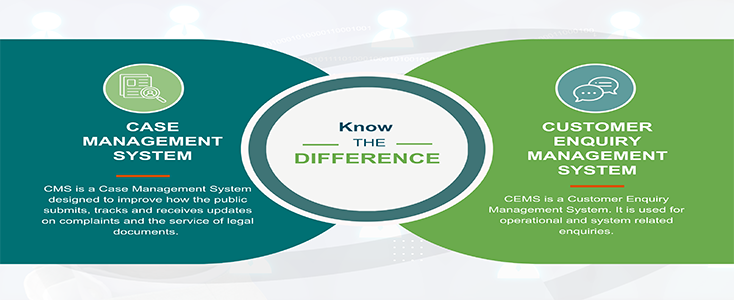
CIPC launches a Case Management System
The Companies and Intellectual Property Commission (CIPC) is pleased to announce the launch of its new Case Management System (CMS), a modern digital platform designed to improve how the public submits and tracks complaints and legal documents.
- Details
- Written by: CIPC
- Category: Uncategorised
- Hits: 17
- The memorandum of incorporation (MOI) determines the minimum number of directors and alternate directors, which, in the case of a private company may not be less than one director. A customised MOI will also set out the eligibility requirements for a director as well as the directors’ term of office. In the case of a standard MOI, the term of office is indefinite and there is no restriction on the number of directors. New directors may be elected by the Board of Directors when there is a vacancy or the company wishes to add directors. Vacancies on the board arise if a director:
- resigns or dies
- ceases to hold the office, title or designation in the company that entitles the person to be an ex officio director,
- becomes incapacitated or disqualified or
- is removed.
- An ordinary resolution adopted at a shareholders’ meeting by the persons entitled to exercise voting rights in the election of that director. The director concerned must be given notice of the meeting and the resolution, at least equivalent to that which a shareholder is entitled to receive, regardless of whether the director is a shareholder. The director must be afforded a reasonable opportunity to make a presentation in person or through a representative to the meeting before the resolution is put to a vote.
- A resolution of the board because it has determined that the director in question has become ineligible or disqualified in terms of section 69 of the Act, is unable to perform the functions of a director and is unlikely to regain that capacity within a reasonable time or has neglected or been derelict in the performance of the functions of a director.
- An order of the court confirming the resolution of the board or removing the director from office if the court is satisfied that the director is ineligible or disqualified, incapacitated, or has been negligent or derelict.
- Certified identity copy of applicant
- Resolution pertaining to the changes (Important – Majority of directors are required to sign the Resolution)
Notice and minutes if the decision was taken in a meeting (All directors to sign the minutes if decision was taken during a meeting.) - Certified ID copies of affected directors
- Mandate by the company for the third party to submit on behalf of the company for both manual and eservices
- Signed Letter of consent to accept the appointment as a director in that company, when a director is being appointed.
- A signed letter of resignation by the director in a case of resignation.
- In an event that a company has a sole director and the board decides to effect the resignation simultaneous with the appointment of a new director, the resolution must be co-signed by both directors. Refer to practice note 2 of 2021
This email address is being protected from spambots. You need JavaScript enabled to view it. andThis email address is being protected from spambots. You need JavaScript enabled to view it. - NB: Lodgement of a passport copy is only accepted as proof of identity for non-residents of South Africa. For South African residents a green bar-coded/ smart ID copy must be lodged.Click here for the CIPC service standards. Service Standard is dependent on payment for the transaction being made.
- Click here to log an enquiry (only after the indicated service standard has lapsed).
- Click here for step by step guide for Appointment, resignation or removal of directors
- Please note that the email address
This email address is being protected from spambots. You need JavaScript enabled to view it. should only be used if the director amendments (CoR39) is lodged electronically. - To appoint, resign or remove a director online click here
- Details
- Written by: CIPC
- Category: Uncategorised
- Hits: 16
- The memorandum of incorporation (MOI) determines the minimum number of directors and alternate directors, which, in the case of a private company may not be less than one director. A customised MOI will also set out the eligibility requirements for a director as well as the directors’ term of office. In the case of a standard MOI, the term of office is indefinite and there is no restriction on the number of directors. New directors may be elected by the Board of Directors when there is a vacancy or the company wishes to add directors. Vacancies on the board arise if a director:
- resigns or dies
- ceases to hold the office, title or designation in the company that entitles the person to be an ex officio director,
- becomes incapacitated or disqualified or
- is removed.
- An ordinary resolution adopted at a shareholders’ meeting by the persons entitled to exercise voting rights in the election of that director. The director concerned must be given notice of the meeting and the resolution, at least equivalent to that which a shareholder is entitled to receive, regardless of whether the director is a shareholder. The director must be afforded a reasonable opportunity to make a presentation in person or through a representative to the meeting before the resolution is put to a vote.
- A resolution of the board because it has determined that the director in question has become ineligible or disqualified in terms of section 69 of the Act, is unable to perform the functions of a director and is unlikely to regain that capacity within a reasonable time or has neglected or been derelict in the performance of the functions of a director.
- An order of the court confirming the resolution of the board or removing the director from office if the court is satisfied that the director is ineligible or disqualified, incapacitated, or has been negligent or derelict.
- Certified identity copy of applicant
- Resolution pertaining to the changes (Important – Majority of directors are required to sign the Resolution)
Notice and minutes if the decision was taken in a meeting (All directors to sign the minutes if decision was taken during a meeting.) - Certified ID copies of affected directors
- Mandate by the company for the third party to submit on behalf of the company for both manual and eservices
- Signed Letter of consent to accept the appointment as a director in that company, when a director is being appointed.
- A signed letter of resignation by the director in a case of resignation.
- In an event that a company has a sole director and the board decides to effect the resignation simultaneous with the appointment of a new director, the resolution must be co-signed by both directors. Refer to practice note 2 of 2021
This email address is being protected from spambots. You need JavaScript enabled to view it. andThis email address is being protected from spambots. You need JavaScript enabled to view it. - NB: Lodgement of a passport copy is only accepted as proof of identity for non-residents of South Africa. For South African residents a green bar-coded/ smart ID copy must be lodged.Click here for the CIPC service standards. Service Standard is dependent on payment for the transaction being made.
- Click here to log an enquiry (only after the indicated service standard has lapsed).
- Click here for step by step guide for Appointment, resignation or removal of directors
- Please note that the email address
This email address is being protected from spambots. You need JavaScript enabled to view it. should only be used if the director amendments (CoR39) is lodged electronically. - To appoint, resign or remove a director online click here
- Details
- Written by: CIPC
- Category: Uncategorised
- Hits: 18
- A company may only change its financial year-end once during a particular financial year.
- A company may not choose a financial year end that will result in the total financial year being more than 15 months.
- A company may choose to shorten its financial year in which instance there is no minimum applicable.
- The new year end must be later than the date on which the notice is filed.
- The current financial year end must not have been ended.
Apply for Financial Year End Change electronically:
- Deposit R100 into the CIPC bank account
- To apply for a change to the financial year end of the company click here
- Click on On-line Transacting and then on Company and Close Corporation Financial Year End Changes
- Login using your Customer Code and Password and follow the prompts
- Go to Co & CC Financial Year End Change
- Type in the registration number (year/sequence/type) at the Enterprise Number field and click Validate. Confirm whether the provided registration number corresponds with the enterprise detail being displayed. If not, reconfirm registration number by typing it in at the Enterprise Number field and click Validate. If correct, click Continue
- Confirm that the detail of the correct entity is displaying and click on Continue.
- The current financial year end will be displayed. Propose a new month and year for the financial year end and click on Continue.
- The next screen will confirm that the financial year end change has been lodged.
- You can generate a new disclosure certificate by clicking on Home and then on Disclosures.
Click here to lodge an enquiry.
- Details
- Written by: CIPC
- Category: Uncategorised
- Hits: 16
The office of a company is very important, as it is the address at which any legal documents will be served on the company. Companies are required by law to ensure that this information is up to date, and maybe liable for a fine or prosecution if it is found that the information is not up to date. The Companies Act requires all companies to keep records of their minutes, resolutions and decisions, as well as the financial statements and share register at a location that has been declared. A notice of the location of the company records must be filed with the CIPC only if the company records are not kept at its registered office or address.
To apply for a change to the location of company records, follow these steps:
Print and complete the CoR22.
Scan and e-mail the completed and signed documents together with supporting information to
The following supporting documents must be included in your e-mail:
- Resolution or minutes of the meeting in terms of which the change has been mandated
- Certified identity copy of applicant
- Power of attorney (if applicable)
Click here for the CIPC service delivery standards
Click here to lodge an enquiry.
Useful Resources
Legal
Other
Need Help
Connect With Us
Download our App